
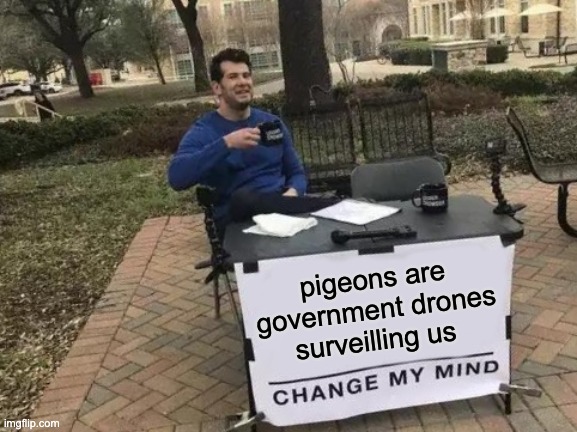
The network society paradigm is complex yet adapts to any context. The network society is known as a free space and platform with no political control. In this week’s reading of “The declaration of the independence of cyberspace” by John Perry Barlow, he discusses the implications of the network society, his article talking directly to the industrial world and government. He quotes “You are not welcome among us. You have no sovereignty where we gather. We have no elected government, nor are we likely to have one” declaring that cyberspace will always be a space that has political fluidity and hence no surveillance or control by governments. The continuous pattern online allows people to talk openly and express opinion, which has dated back since the beginning of the internet and computers. Yet, throughout at America, China and likely other countries, governments have taken control of the digital world contradicting the suggested reading. Many even believe pigeons are actually government drones that surveillance us… what a silly theory.
this week’s remediation:
Electronic Frontier Foundation. 2020. A Declaration Of The Independence Of Cyberspace. [online] Available at: <https://www.eff.org/cyberspace-independence> [Accessed 13 August 2020].
 justjules.travel.blog
Hi Julia,
This was a really interesting and well put together blog post about this weeks topic. I also touch upon ideas in my blogpost that Barlow, J.P wrote about in the article “The declaration of the independence of cyberspace”. I found the concept this week really interest and I thought that your blog highlighted the important parts. Overall a good piece of work, to enhance your understanding of this topic I found the following article helps to better understand the reading by Castells.
http://insidewestminster.co.uk/how-does-castells-define-the-network-society-what-are-the-advantages-and-limitations-of-the-concepts-for-understanding-current-societies/
In sum a really good job 🙂
LikeLike