BCM206 BETA

BCM206 BETA

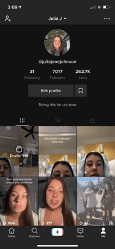
Over the past 9 weeks, I have been making TikToks for my digital artefact in BCM206. I aimed to make around at least 5 TikToks per week equalling to around 45 TikToks across the 9 weeks that have passed. Instead I have only posted around 20 TikToks. In comparison to the 2 other digital artefacts on TikTok I did in BCM112 and BCM114, the engagement has been minimal. I used to make videos that equated to over 400k views and 100k likes, the most viewed video in this subject has reached 42k views, this video is still considered successful and I believe I was aiming to overachieve in my pitch due to my previous success.

The reason for my videos not reaching the for you page can be narrowed down to something that has been made apparent across this digital artefact, TikTok is very different to when I started using it. The application has nearly triple the number of users, reaching the billions. The chance of my video being engaged with is much more minimal now. Millions of videos are being made daily. I think the lack of views on my videos has made me feel less encouraged to post, as I lose followers and seem to get less and less views on each post. Into the future, I’m not going to change the approach to my videos and will still try and keep up to date with trends and post accordingly. Instead, I will try to post more content and try to not be phased by the content already posted. My approach will be quantity over quality as I find the most basic videos can attract the most attention ironically. Aside from the flatlining of my content, I still find it so fun to create content on TikTok and am so excited to continue my work on the application.

Watch my video below for further information on my beta!!

BCM241 DA pitch

BCM241 DA pitch

After weeks of research and planning, Sophie and myself are now able to present our media niche project “Advertising amongst social media platforms”. In the video linked a the bottom of this post, we discussed the elements of this project we will be investigating and how we will be approaching the topic as a whole, using quantitative and qualitative research and both primary and secondary methods.

We both decided to explore advertising amongst specific influencers including Charli D’amelio and the Kardashians and how they use the large platforms to advertise brands on apps such as Instagram or TikTok. By studying these influencers, we will narrow down how much money they make, the average engagement of an advertisement post in comparison to a normal post and how an influencer’s support in a company can change their fans point of views.

Sophie and I will be using the autoethnography method to further our knowledge as well as using observation when we interview a small-time local influencer to gather primary information. We will collect this information and gather it into a series of blog posts, posted on each of our blogs.

Due to Covid, Sophie and I have not yet been able to meet in person, so we will continue to use a joint google document to make field notes throughout the project. We have also been making weekly discord calls to check on each other’s progress and feed each other information. Since the beginning of the semester, Sophie and I added each other on Facebook as well and stay regularly in contact.

Week 4 – Global Social Media

Week 4 – Global Social Media

Instagram is a platform that allows me to express myself in a certain way. Instagram is known for its countless amounts of photoshop and insanely people would buy likes and followers, all for validation. On Instagram, there seems to be an unaired competition between everyone’s accounts: Who has the most followers? Who has the most likes? Whose photos are better quality?

Instagram vs. Reality' Exposes The Truth About Those Unrealistically  'Perfect' Pics | Bored Panda

I tend to not photoshop and buy validation personally, I instead use the social media platform to express myself by posting photos of myself and sometimes with friends or family, were I’m genuinely happy. A few years ago, I would base every photo I posted on the amount of likes I would get and followers I would gain, if it was not sufficient enough, I would then delete it. Now, I post phots for myself and find joy from editing the filters on my photos. I use my profile page as a reflective mechanism, a visual diary I can look back at and be grateful for all the happy memories I have made. I try not to focus on the analytic side of the platform and don’t compare myself to others, it is hard, but I found more self-confidence from not basing myself off other people or worrying about what people think.

In a medium article, a journalist Zaina B, attempted to go 2 weeks without the social media platform, Instagram. In the 2 weeks she was without the platform she then reflected at the end that “In the past two weeks, I have clicked on the Instagram app for completely different reasons. Before, I would go on Instagram to update friends and strangers of the most flowery parts of my life. To figure out why people post things on social media, I had to first ask myself why I post the stuff I do”. She found that spending 14 days off Instagram, helped her reflect on why she was on this application at all. Zaina discovered she used to post (much like myself) for validation off others.  Her new quest on the app was to post for herself and to update her loved ones on how her life is progressing.

In this week’s reading about funeral selfies called “Selfies at Funerals: Mourning and Presencing on Social Media Platforms” The authors discuss the extent of social media, specifically Instagram. “It is important not to place too much significance on the selfies and assume that they are a summation of an individual’s feelings and general approach towards the ritual event. Selfies are intended to be an ephemeral and creative form of “live communication” that are part of the ongoing streams of social intercourse in the lives of the people depicted. They are not attempts at storing or preserving life” Van Djick quoted, explaining the form of communication used by an individual to portray their feelings. He  later adds it could be loud forms of posting such as funeral photos could be used for a  source of validation, in its purest from – a cry for help and comfort.

upload.wikimedia.org/wikipedia/commons/thumb/e/...

Medium. 2020. Everyone On Social Media Is Seeking Some Kind Of Validation. [online] Available at: <https://medium.com/@zainabwrites/everyone-on-social-media-is-seeking-some-kind-of-validation-c285b3f232ed&gt; [Accessed 1 September 2020].

moodle.uowplatform.edu.au. (n.d.). Platform: Log in to the institution. [online] Available at: https://moodle.uowplatform.edu.au/pluginfile.php/2425506/mod_resource/content/1/W4%20BCM111%20Meese%20et%20al%20-%20Selfies%20at%20Funerals.pdf [Accessed 1 Sep. 2020].

Week 3: Global News

Week 3: Global News

Aside from the actual news, everything I hear about news wise; I tend to find on social media. From local news to international news, all you have to do is looks at the trending page on Twitter, and it will tell you everything that is going on globally, with no barriers or sugar coating. There are pros and cons to both forms of journalism, and each have revolutionised our way of thinking.

Mainstream news is informative and give you information quickly and is extremely detailed, we seem to trust this form of journalism more. Yet, news companies tend to only tell us half of the stories happening globally, they only tell you information that they want you to hear and tend to sugar coat. For example, disaster is happening in Syria, a country in War, or the concentration camps in China for Muslims that killing millions of innocent people, yet mainstream media has not brought any of this information to light. Instead, it seems that they are covering up these stories and are in fact ran by governments. Whereas, online journalism is nearly just as quick and gives you real and tough journalism. Citizen journalism gives you information that is definitely not sugar coated and tells you every gritty bit including photos. They give you tough reality checks and make you open your eyes to severe circumstances. Twitter, Instagram and TikTok were all platforms that lighted the flame after the horrific death of George Floyd in America, every day citizens rallied around each other spreading news of disastrous events mainstream news had not made people aware of. Along with this impactful change in journalism, it still holds its faults. With everyone being able to spread news through a simple tweet, Instagram or Facebook post, people are able to twist stories into a new version, simply lie or too strongly voice their opinion. It impossible to tell whether some stories told online through media are true or just a rumour and with there being bias, it can shift the way people view a story all together.

Many people argue that the two forms of journalism are equal, as mainstream news gives us factual information in a timely manner and media gives us 100% of stories happening globally with real facts. It is here we hold the question: what news is actually real and what manipulated, changed or false?

An example of citizen journalism is the recent tragedy in Beirut which later lead to a security lockdown in Lebanon, when the government started to refuse using their resources to further investigate and dig for survivors. The world was unaware of how what the Government was doing hence citizens took to social media such as Twitter and Facebook to take a stand. The citizen journalism extended to helping them rally around each other and start protesting to protect their rights. The New Arab article stated “Activists would share cellphone footage of these incidents, accusing broadcasters of deliberately not showing up to the scenes or the government and ruling parties from preventing journalists from entering”.

'We will not be silenced': Journalists are also victims of Lebanon's security clampdown

BBC News. 2020. Mainstream Media ‘Still Dominate Online News’. [online] Available at: <https://www.bbc.com/news/technology-27772070&gt; [Accessed 18 August 2020].

Chehayeb, K., 2020. ‘We Will Not Be Silenced’: Journalists Are Also Victims Of Lebanon’s Security Clampdown. [online] alaraby. Available at: <https://english.alaraby.co.uk/english/indepth/2020/1/20/journalists-are-also-victims-of-lebanon;s-security-crackdown&gt; [Accessed 18 August 2020].

Week 2: What popular culture do I consume?

Week 2: What popular culture do I consume?

There are copious amounts of popular culture that I consume on the daily. Examples being television and hours of social media including Instagram, Snapchat, Facebook etc. However, one type of popular culture consumes HOURS of my day, swiping on my phone mindlessly. This being TikTok, an application that has astronomically took over the world in a matter of month. In short, the app allows you to watch short videos on a loop through their “for you page” which is accustomed to the individual person, giving you hours upon hours of content to enjoy. It is extremely addictive due to how many people make videos/use the app, broadening what you watch.  As well as spending most of my time watching TikToks, I have also created content for my digital artefacts in BCM112, BCM114 and for BCM206 this semester. It’s so fun investing time in making TikToks, and it is almost as addictive as watching them.

TikTok originated in China when it was merged with a popular Asian app called ‘Musicaly’. The new formed app first became popular when a famous music artist made a video about his new song “old town road’ bringing the app into western culture. Many fans downloaded the app and used the song to make videos. From there the app continued to grow and from late 2018 to now, the app has gained over 2.3 billion downloads. It is the fastest growing form of social media in history. Now artists such as Doja cat have grown their platforms from TikTok, Doja cat’s music grew to popularity purely due to TikTok videos. TikTok has revolutionised this generation, trends, sounds and music are performed by millions of people daily. Business Insider stated that TikTok promotes equality and helps people find their voice, the culture on this app is described as positive and welcoming. It has for many, changed the way people think and allowed people to voice their opinion.

With that being said, this chosen popular culture correlates closely with a theory from this week, Cultural proximity. In the reading Cultural Proximity and Audience Behaviour: The Role of Language in Patterns of Polarization and Multicultural Fluency, Straubhaar explained cultural proximity as ‘‘the tendency to prefer media products from one’s own culture or the most similar possible culture’’.  TikTok became popular when countries such as England, Australia and America invested in the app.  When western creators started making content, more people globally began to download the application. The reason for this is due to when Asian countries solely dominated ‘musicaly’ the original app, many people from western countries were not interested in this content or couldn’t relate to it.

 People to tend to invest in media that relates to their own culture or is similar, it seems to be more comfortable and preferable. TikTok has become a part of everyday life, much like Facebook and Instagram, however the app is that popular, trends from the app have even been seen and used on mainstream television and it has had the ability to make normal people extremely famous.  

TikTok: Here's How to Share a Video Outside of the App

Leskin, P., 2020. Inside The Rise Of Tiktok, The Viral Video-Sharing App Wildly Popular With Teens And Loathed By The Trump Administration. [online] Business Insider Australia. Available at: <https://www.businessinsider.com.au/tiktok-app-online-website-video-sharing-2019-7?r=US&IR=T&gt; [Accessed 11 August 2020].

Ksiazek, T. and Webster, J., 2008. Cultural Proximity and Audience Behavior: The Role of Language in Patterns of Polarization and Multicultural Fluency. Journal of Broadcasting & Electronic Media, 52(3), pp.485-503.

Behind the scenes – Background research and ethics of advertising through influencers

Behind the scenes – Background research and ethics of advertising through influencers

Now that we have initiated our research plan and made a planned schedule of our media niche, it is now time to display our background research and show some ethical implications of advertising. In this blog post, we will be analysing secondary sources that represent our niche of advertising amongst social media platforms, for example why companies want to use certain influencers for their products and how this affects their sales/profit. Our theoretical framework will involve us gaining more insightful information on our media niche, that being advertising, and to use this information to gain a deeper understanding on our topic.

Ethical considerations

We will be using the MEAA code of ethics as a directory when approaching our research into our niche. We will remain unbiased throughout our research, only observing what we find rather than giving our opinion. We will only be making general observations about a comment that a fan or an influencer has made. We will be interviewing a small local influencer, before we proceed to interview however, we be asking for her consent to use her name and identity. We will not be quoting her directly and will instead talk about our experience on the niche and this case study. All research will be recorded in a fair and ethical way, remaining anonymous. As well as this, both Sophie and I have agreed to remain unbiased in our research and keep our information unopinionated, our opinions will be kept out of all of our work.

Background research

 Our theoretical framework will involve us gaining more insightful information on our media niche, that being advertising, and to use this information to gain a deeper understanding on our topic .For our autoethnography method, we will be interviewing a small local influencer who regularly advertises on Instagram for a popular clothing brand in Australia, Princess Polly. During both our experiences of our media niche, we both bought a product from one of her advertisements with a unique discount code “chels20”. Based on the interview, we will be seeing how our interactions with her advertisement and code reflect on the results of her overall deal. Even outside of the people who we follow on Instagram and Tiktok who are big influencers like Charli D’amelio, we will see an average of 40-50 advertisements in one day from other small influencers, accumulating to the 4-5 hours we spend on our mobile phones and social media. 

In reference to the above photo, as the most used social media platform for sponsored content by influencers is on Instagram, we will be focusing our research on Instagram (whilst still referencing other platforms). We will also be using the “Influencer Marketing in 2020: 5 Guidelines for Maximizing the Results of Working With Influencers” article, which will help Sophie and I build a structure for how social media influencers interact with their audience.

Sophie and I very excited to continue this research project together into the future, we are so lucky to have found substantial information on the internet and are keen to explore further.

References:

Cronin N, “A Simple Guide To Instagram Influencer Marketing in 2020”, Web Article, July 23, viewed on 1 September 2020.

Gotter A, “Influencer Marketing in 2020: 5 Guidelines for Maximising the Results of Working With Influencers”, Blog Post, February 11, viewed 1 September 2020.

Login, S., Login, B., Login, S., Scheduling, P., Management, S., Care, C., Intelligence, D., Advocacy, E., Business, S., Stories, C., Blog, S., Center, R., Updates, P., Portal, L., Studies, C., Blog, A., Analytics, T., Listening, S., Tools, S., Campaigns, S., Login, S., Login, B., Login, S., Trial, S. and Chen, J., 2020. Important Instagram Stats You Need To Know For 2020. [online] Sprout Social. Available at: <https://sproutsocial.com/insights/instagram-stats/&gt; [Accessed 1 September 2020].

Week 2: A global nervous system – from the telegraph to cyberspace

Week 2: A global nervous system – from the telegraph to cyberspace

Stranded in Europe, I don’t feel like a displaced person. I’m buoyed by an invisible network of friends and strangers all connected by social media.

By Micah L. Sefry

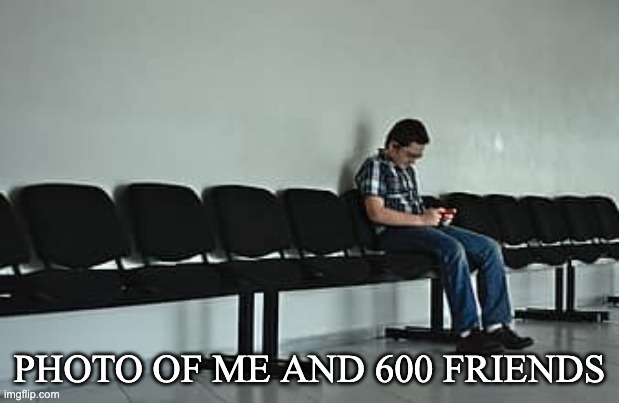
Just when I thought BCM112 had complicated weekly topics! This week we discussed the development of globally integrated information networks and their role in the formation of the network society. The formation of information networks allows us to communicate globally. I found a great article surrounding the global nervous system, the article addresses that even in the most alone states such as being deployed in the army, you are never truly alone. With Skype, Twitter, Facebook etc. the world is constantly connected. We all have the ability to contact each other from opposite sides of the world as well as allowing us to meet new people from different countries. My remediation below shows how you can be alone, but on the other side of your phone you could be interacting with over 600 people or more. The network society is only growing larger, allowing communications to widen and spread.

The Nation. 2020. The Global Nervous System. [online] Available at: <https://www.thenation.com/article/archive/global-nervous-system/&gt; [Accessed 7 August 2020].

Week 3: Civilisation of the mind – understanding the network society paradigm

Week 3: Civilisation of the mind – understanding the network society paradigm


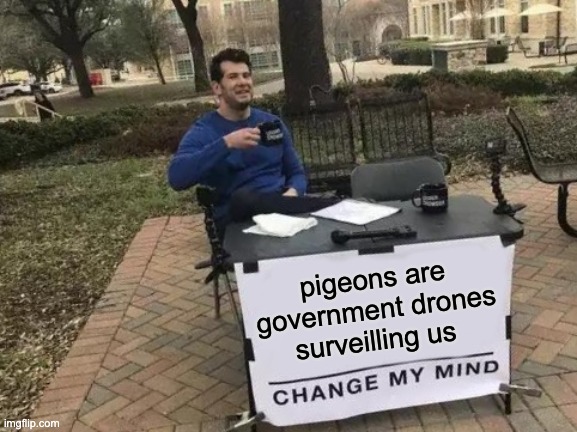
The network society paradigm is complex yet adapts to any context. The network society is known as a free space and platform with no political control. In this week’s reading of “The declaration of the independence of cyberspace” by John Perry Barlow, he discusses the implications of the network society, his article talking directly to the industrial world and government. He quotes “You are not welcome among us. You have no sovereignty where we gather. We have no elected government, nor are we likely to have one” declaring that cyberspace will always be a space that has political fluidity and hence no surveillance or control by governments. The continuous pattern online allows people to talk openly and express opinion, which has dated back since the beginning of the internet and computers. Yet, throughout at America, China and likely other countries, governments have taken control of the digital world contradicting the suggested reading. Many even believe pigeons are actually government drones that surveillance us…  what  a silly theory.

this week’s remediation:

Electronic Frontier Foundation. 2020. A Declaration Of The Independence Of Cyberspace. [online] Available at: <https://www.eff.org/cyberspace-independence&gt; [Accessed 13 August 2020].

Week 4: The chronic task of sorting – information flows and liquid labour

Week 4: The chronic task of sorting – information flows and liquid labour

This week’s topic is coherent with everything going on globally around the world, and it always will be. The idea of have media is sorted into its historical context interests me, how online presence meshes and fits into present time. An example of this is the ‘BLM’ movement. There is much controversy of over media’s support towards this movement, influencers being believed to use the movement online to self promote themselves, as well as companies and brands. An example of a company support the Black lives matter movement is H&M a popular clothing brand who donated $500K and quoted “let’s change”. Many people speculate whether it is self promotion when tis comes to these charitable brands, yet it is still up to debate. The subversion of media almost makes a meme like environment online, contradicting the flow of information online.

“Industrial work is set to the rhythm of the machine, while knowledge work is set to the flow of information” (Mitew 2012).

This week’s remedition:

Ray Nguyen. 2020. Liquid Labour: A Bless Or A Curse Of Information Technology?. [online] Available at: <https://ray2401.wordpress.com/2017/08/15/liquid-labour-a-bless-or-a-curse-of-information-technology/ [Accessed 28 August 2020].

Livingston, M., 2020. These Are The Brands Giving Money To The Black Lives Matter Movement. [online] CNET. Available at: <https://www.cnet.com/how-to/companies-donating-black-lives-matter/&gt; [Accessed 28 August 2020].

BCM241 – Time to plan

BCM241 – Time to plan

Now it’s time to plan. Sophie and I have established our niche “Online Advertising Amongst Social Media Platforms” And have organised what topics within this niche we want to research. After gathering our ideas and narrowing our niche to are more specific industry, it is time to move on. The next step to reaching our goals is begin researching, we will be doing this through three steps. These three steps are to problematise from our research, create a research plan and then schedule our research.  

Problematising

The first step is to problematise our niche, Sophie and I have pinpointed key issues in our niche that can help people better understand what we are discussing.  By discovering problems in our niche, it will later aid us in our digital artefact at the end of the semester. Bringing issues forward, gives our niche a different dynamic. It allows people to see our niche from a polar opposite perspective. We discovered that advertising on social media platforms from influencers is not always positive encourage many issues. Although many people buy into products that influencers advertise, advertising can also have an ulterior effect and will deter people from buying into these companies. An example of this is the recent controversy surrounding Shane Dawson and Jeffree Star, many of the young audience will not buy into their products due to no longer supporting their actions.

Some of the problems that we narrowed down and will research include:

  •  defamation of companies
  • Wrongful advertising
  • Controversy over advertised company’s brand (eg. An influencer advertising a company that does not relate to their own brand or advertising a controversial company)
  • Discrediting brands

Our paradigmatic framework will explore the content shared from social media influencers e.g. Charli and Dixie D’amelio, and taking notes on how they advertise brands across their social platforms ie. TikTok

Research plan

Sophie and I will be using both qualitative and quantitative research methods to help us reach our end goal. Examples of this are surveys, analytics and specific case studies. Throughout our research we will be recording notes on our shared google document and gathering data that we will later put all together into final digital artefact. We will be looking closely at the companies being advertised, who is advertising them, what platforms they are being advertised on and the response to these advertisements by audiences. The main ethnography method we will be using is “audience ethnographies”, the way audiences respond the media through culture, politics etc. We will be using this article as a example in association with our studies: http://www.globalmediajournal.com/open-access/audience-ethnographies-a-media-engagement-approach.php?aid=35086

Research scheduling

Due to Covid, Sophie and I have had to adapt to a new environment and discover new ways of studying from home (along with everyone else). for obvious reasons, doing a joint DA will be challenging yet technology is helping us still work together. We plan on contributing 3-4 hours weekly to our work and will communicate over discord calls and Facebook messenger. Shown below is our research schedule for the rest of the semester.

Thanks for reading x