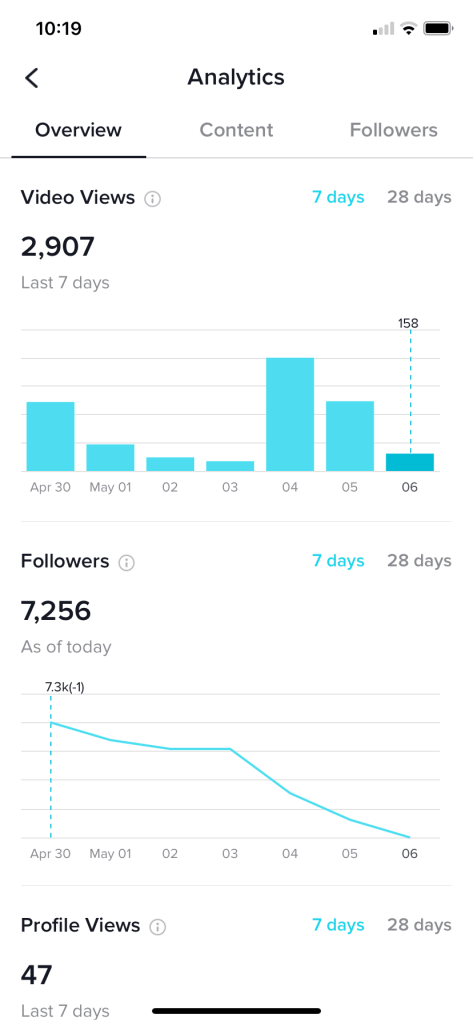
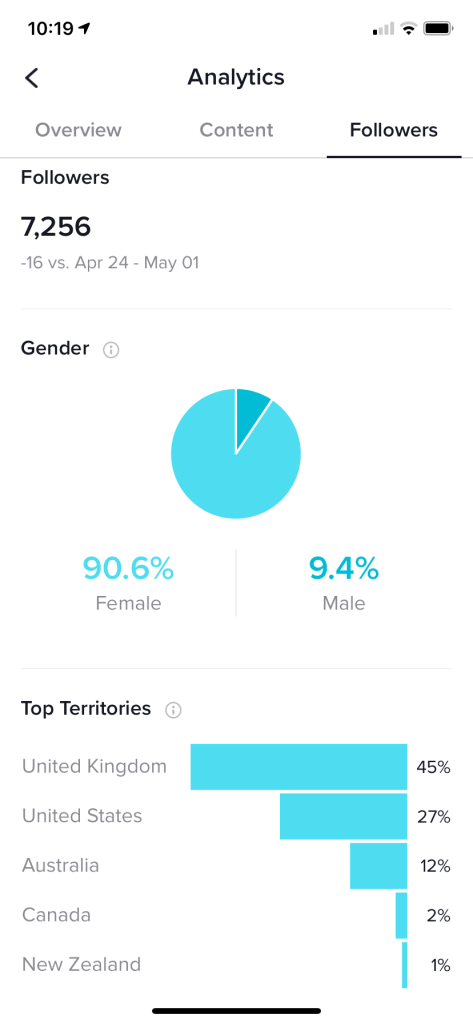
After successfully completing BCM112 and BCM114 with similar digital artefacts, I want to extend my idea through to BCM206. This idea is TikTok, an application I use daily without failure and find extreme entertainment from. I have made slightly viral content through these subjects and really enjoy making them, although it’s seriously embarrassing knowing anyone can see them. One of my videos last year reached over 400,000 views and I’ve gained around 7000 followers since. Throughout this subject, I hope to follow current trends on the app to see which videos gain the most attention and to get on the ‘for you page’ which is essentially the discovery page of TikTok, where everyone mainly watches the videos. According to Oberlo, the most attractive times globally on TikTok are 6am to 10am and 7pm to 11pm. Similar to BCM112 and BCM114, I will post videos at these suggested times in hope of attracting upmost engagement. I am so excited to take on TikTok again through this subject, I find that every time I do this idea, it ends up being completely different and definitely more interesting. Make sure to follow me on TikTok to see how this pans out as well as twitter for updates and more! (all linked below)
OH and make sure to watch my youtube video down below!
A LOT has changed since last week’s blog. I mean a 360 degree change, different niche and different approach. I’ve decided to collaborate with someone from my class, who expressed that she had a similar interest to me after I pitched my niche to our class. Welcome Sophie! Sophie’s blog is https://sophiemorrriss.wordpress.com/ if you would like her follow her along as well on our collaborative niche/DA.
Our new idea stemmed from our similar interest in the beauty industry and how large companies Involve Big social media influencers in their branding for larger engagement of their products. Amongst other large industries such as clothing and music, these large companies get influencers to post advertisements on the largest platforms such as Instagram, YouTube and Tik Tok. Through these social media posts, which could be a short video an a Instagram Storey to a to even a YouTube video involving a 30 second promotion, Influences have the ability to mass advertise products to millions of people.
From previous experience, as a young teenage girl, I had impulsively bought something one of my favourite influencers promoted purely due to the fact that they showed interest in it. Currently, the largest influencers on any platform are the TikTok stars, some of the largest names being Charli D’amelio, Addison Rae and Dixie D’amelio. Their large influence over the younger demographic Allows them to successfully mass advertise a company’s product.
The above field site made with the help of Sophie displays the influencers, interactions, advertised products and the social media platforms that are used for our niche “Online Advertising Amongst Social Media Platforms”. As this topic is fairly broad, Sophie and I will definitely be elaborating on the sources and influencers used in this form of advertising.
One idea that is remaining from my original niche is the discussion of Charli D’amelio. Sophie and I both found extreme interest in Charli’s online presence. As I addressed in my previous blog post, this influencer’s social media platform is one of the largest and fastest growing platforms I have ever seen in comparison to any other, including Kylie Jenner, one of the most famous influencers globally. Charli receives an average of 20 million views per TikTok video and her engagement is at a global peak.
Alongside Charli D’amelio, many other influencers from this platform and other platforms such as YouTube and Instagram all have accumulated fan loyalty from a large fan base created overtime. These fanbases are largely influenced by social media influencers and therefore have extreme power over their follower’s political, consumer and charitable choices. This is where branding and collaborative deals come into play.
An example of this that we hope to research more in depth is the recent collaboration the D’amelio sisters recently took part in with Morphe, a popular makeup brand. The sisters are not widely known for being part of the beauty community which caused large speculation, yet it was still a multimillion dollar brand deal.
I’m so excited to do this niche with Sophie and explore it in a lot more depth. Make sure to follow us along on both of our blogs and social media!
Social media is powerful, its influence on any audience varies opinion yet its impact is global. Any form of social media can become ‘viral’, such as a YouTube video, tweet or instagram post yet it also has the power to make people go viral overnight. Social media is known for making ordinary people global phenomenons in a matter of hours. When studying what I would research this semester, this media niche caught my attention immediately: Influencers, the social media superstars.
I immediately chose this media niche at 11pm in my bed scrolling through Tiktok, a looping video application. I scrolled upon the now celebrity status ‘Tiktoker’, Charli D’amelio. TikTok is an app that has only gained popularity over the past year, however has made many newborn celebrities for making short videos. Charli D’amelio is known as the most popular amongst this bunch. Charli makes short dance videos on Tiktok, one of these videos became viral overnight. The influencer gained over 5 million followers in less than a week. Charli now has 78 million followers on Tiktok, 26 million on instagram and 3.7 million on twitter, all from making dance videos on a singular application. Each of her videos average around 20 million videos and around 6 million likes. These statistics amazed me, a 15 year old girl receiving this much engagement for doing something so simplistic, yet most influencers are alike.
Alongside Charli, there are many influencers alike such as Addison Rae and Noah Beck who have gained fame from this platform. Generation Z have idolised these individuals from making these short videos and in response have made them influencers. Other social media platforms such as Instagram and Youtube have also made influencers through their applications.
The accumulated audiences social media influencers gain allow them to have large influence, striking true to their title. This is where ‘the medium is the message’ theory comes in, the opinions influencers deliver through social media is sent directly to their audience and can influence the individual viewer’s point of view, either positively or negatively. Influencers have the ability to influence millions of people and use their platforms to voice their opinions on topics such as advertising products, politics, charities etc.. Through posting videos and photos, these social media celebrities statistically receive more engagement than television celebrities according to mediakix. Large companies pay thousands of dollars to have influencers advertise their products on their social media platforms, for example through Instagram stories which can be viewed by millions of people.
The above image shows an influencer posting an advertisement on her instagram story, which can be viewed by all of her followers.
With these gathered statistics and my premature interest in this subject, I am extremely interested to research this niche throughout this semester. I want to discover the depths of what it really takes to be an influencer, how content becomes viral and ‘cancel culture’ amongst influencers. I’m so intrigued by this niche and I’m excited to explore it. If you want to follow along, make sure to follow my blog and follow me on my twitter linked below!
Raphael, S., 2020. A Tiktok Expert Explained Exactly How Charli D’amelio Got Famous On The App (EXCLUSIVE). [online] Distractify. Available at: <https://www.distractify.com/p/tiktok-charli-damelio> [Accessed 6 August 2020].
Content on the internet, when original and self-made, can be claimed by its creator(s). It is known as their Intellectual property and they have, to a certain extent, an amount of control of it and who uses it. This is were copyright is initiated. Copyright is the legal ownership of the content on the internet, and when users use this copyrighted material, they have to refer to its creator. If a user doesn’t refer to its creator, it is known as copyright infringement, an illegal act that can be punished up to millions of dollars. An example of this is Disney’s copying of original cultural stories for creative purposes, however, it’s here that in lies the question: to what is ownership and control over content legible? Disney defended themselves by saying the cultural stories produced a certain amount of freedom. A similar accident happened later on with a Japanese comic artist who copied ‘free’ ideas from online without reference.
As discussed last week, the internet can be a dark, invasive space that puts personal data at risk and invades privacy. In a sense, you could say the internet is TOO invasive and dangerous, however people believe it is a necessity. At its core, the internet is a money machine that purchases content for profit, and the cycle continues. The internet is the largest platform currently, each user being able to search and share to their heart’s desire… however they are being surveilled the entire time. Surveillance is considered one of the largest breaches of privacy.
China is known for its surveillance, having intense facial recognition software and billions of cameras in public. Amongst many other countries, China knows everything about its people, retrieving all their data from their devices and constantly tracking their whereabouts. America and Australia are amongst the other countries who are believed to use the same protocol, however China’s regime is by far the most known and brutal regime of surveillance.
The future of technology is based off adaption and mutability of technology. However, with these adaptations, technology can become more advanced than ever, and significantly more powerful too. The law of the internet only extends so far – the capability of its users being almost infinite. The dark side of the internet only expands with the emergent of technology. Spamming, viruses and hacking of hardware are all examples of control over internet by outside sources, these unwanted accesses can cause problems with your owned technology as well as giving people access to private information.
As earlier discussed, certain networks have control over its advertising for specific users. Facebook confessed to looking at people’s data in order to provide them customised advertisements. With the adaption of these networks, aside from the positives, we are giving them more control over our data and further access.
My BCM112 digital artefact has definitely been one big rollercoaster so far. This is my second year of doing TikTok as my digital artefact (I also did it in BCM114 last year) yet the outcomes have differed astronomically. As I earlier addressed, I had 4 viral videos last year. My luck with these videos led me to believe it would be easy for me to make more viral content, I WAS WRONG.
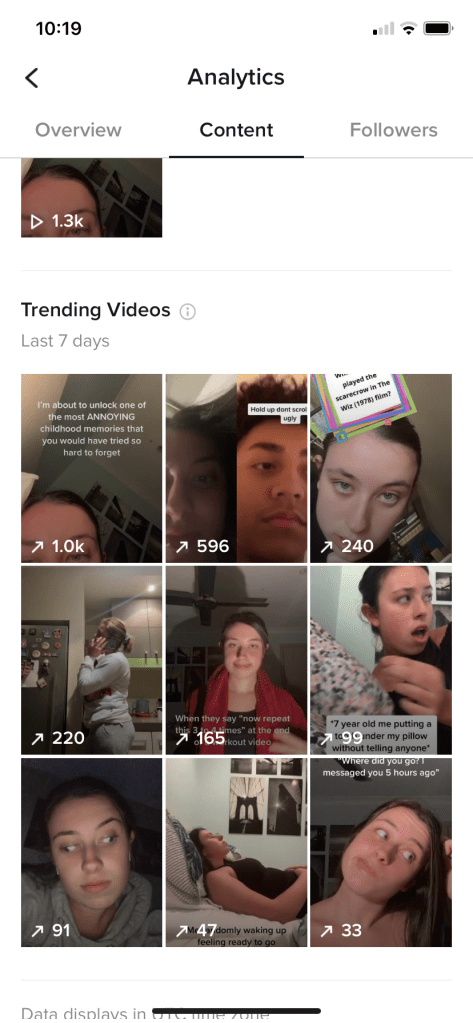
The followers I made last year aided me in getting a significant amount of views, however my most popular video only received a mild 3450 views and I average 150 likes a video, nowhere near what I was used to even though my videos correlated with popular trends. I even lost a few followers due to my content not being as desirable and posting too much. I did some research to explain why my videos weren’t attracting as much attention and discovered something significant: Oberlo reported in February that the popular app had gained over 800 million users since November 2019.
Due to this massive increase in followers, it would make sense that my content is even more blurred within the app. I currently have made 65 videos on the app, my steady pace of posting has remained consistent from the beginning of the semester. I hope to continue this consistency through to the end of my digital artefact. Hopefully the continuation of my project will bring more attention than it previously has. I’m going to try to post even more desirable content in order to grab more attention.
Make sure to watch my Beta video on youtube and follow my TikTok (both linked below) 🙂
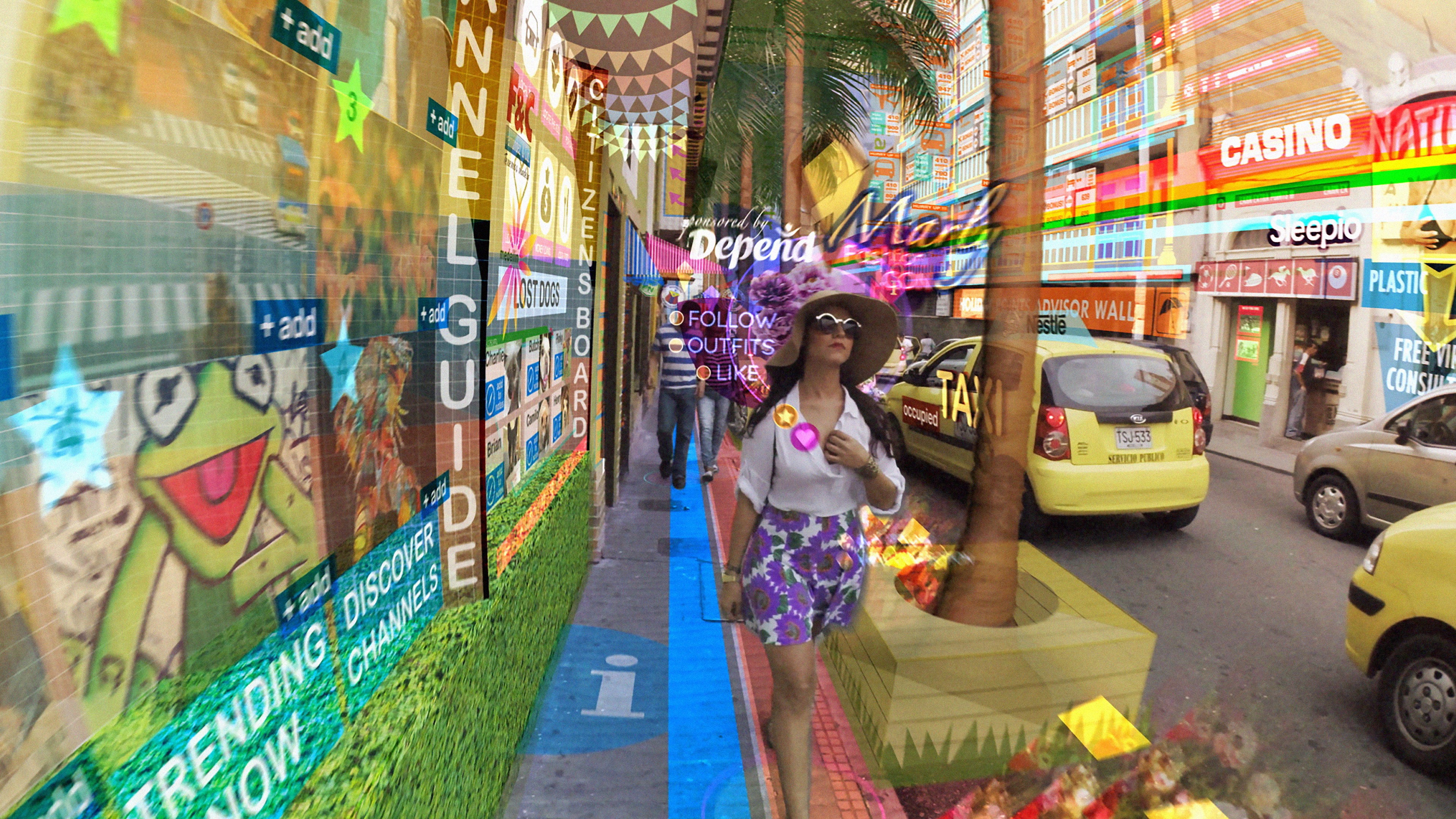
Part 4?! The internet paradigm subject is so broad and conceptual. This week we learnt about Hyperreality , Simulation and spectacle. Essentially there are 4 phases of an image: REFLECTION, MASK, ILLUSION and SIMULACRUM. Each are stages of a simulation. A reflection is a capture of a reality, a mask covers reality, an illusion is an altered reality in its absence and a simulacrum is a substitution of reality. This week’s topic is basically how EVERYTHING is perceived online. Hyperreality is an altered version of reality, a brightened, energised version of the world, false yet intellectual. It is perverted and alerting yet captures all audiences attention. Many people created these altered but popular realties. But why? is the lingering message, is hyperreality a desired implication? The pattern of internet paradigm longs this question.
“The concept of framing consistently offers away to describe the power of a communicating text” – Robert M. Entman, Northwestern University
This week’s topic heavily surrounded the perception of media, framing and schema. Framing is essentially the way something is perceived online where as schema is the pattern of data stored by memory. Framing is commonly used in media to make an altered reality. Framing and schema correlate due to how our minds process data.
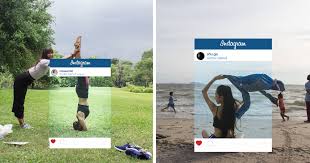
As seen in the above image, framing is how we perceive ALL content, even in its simplest forms. Without the outside image, the framed media is perceived much more differently. Framing media constructs a certain point of view, even forms of photoshop and angling allows a different form of framing that makes audiences view media from a different perspective. All media is manipulated so audiences see what the producers want them to see.
This subject definitely has me learning in depth, COMPLEX content. The concept of the ‘internet paradigm’ is a complex and subjective concept. In this section of the concept, we learn about distributed media and ‘Meme warefare’. ‘Meme warfare’ is referred to as “competition over narrative, ideas, and social control in a social-media battlefield”. In a simpler form, Meme warefare is when become political in a sense and have a specific point of view. An example of this is the military based memes on TikTok and Twitter during an accident involving Trump and Iran in January. People on TikTok and Twiiter made dark jokes on the a pending crisis, mentioning everyone being “shipped off to war”.
There are many forms of distributed media such as Open loops and Feedback loops. These describe what type of media is being produced basically. Meme Warefare and distributed media correlate due to how it is perceived. Certain Memes spark debate and are controversial , the operation of these memes are to draw attention and ignite conversation, giving it engagement. The meme then evolves from there.




 justjules.travel.blog