Confidentiality – the extent of journalist’s inquisitive behaviour, when is it too far?

Confidentiality – the extent of journalist’s inquisitive behaviour, when is it too far?

Confidentiality –
The state of keeping or being kept secret or private.

google

Sources-
place, person, or thing from which something originates or can be obtained.

google
google images

The media plays an essential role in gathering and disseminating information in a democratic society. Confidentiality of all sources is a necessity in journalism, all journalists rely on sources for relevant information in regards to their stories. However, in gaining new information off sources, it is of utmost importance to respect and protect the source’s identity if requested. If this trust between a journalist and a source is broken, it can damage future interviews and the source’s exposure in media. ‘Journalistic Privilege’ further extends the trust of journalists to a legal level, them having the right to not reveal confidential information and sources in court, protecting the source’s rights. Journalists must ask a source whether they would like to remain anonymous before an interview and if they are able to be recorded as a means of respecting and protecting their confidentiality. The morality of breaking confidentiality can tamper with people’s emotions and mental health, adding to the cruciality of protecting the sources.

MEAA Journalist’s Code Of Ethics

Members of MEAA are encouraged to commit to fairness, honesty, independence and respect for the rights of others. The third standard quotes “Aim to attribute information to its source. Where a source seeks anonymity, do not agree without first considering the source’s motives and any alternative attributable source. Where confidences are accepted, respect them in all circumstances” highlighting the necessity to respect the source’s privacy. The Journalist’s code of ethics was formed in 1944 in Australia to encourage and maintain respectful and appropriate reporting, confidentiality being of utmost priority in association to the handling of sources whether through searching, questioning or engaging.

Eavesdropping
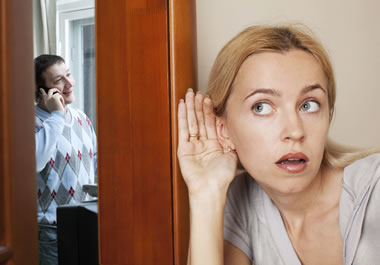
In many cases, eavesdropping is acceptable for journalists, whether this is overhearing a conversation or finding yourself in a situation which can be reported on without revealing the consequential sources. Yet if you intentionally view a private email that is not your own or listens on to a call, you are inevitably breaking the law and are acting ethically and morally wrong. Eavesdropping itself is being argued as wrong due to its invading privacy, despite the circumstances, even though the journalist’s eavesdropping is justified. The justification of such eavesdropping circulates around the circumstances, such as the sensitivity of the information gained and whether or not it could damage the source in any shape or form.

Uncovering the truth

Ethics in relation to uncovering truth varies depending on each circumstance in association to confidentiality. The overall consensus of uncovering the truth, also known as undercover journalism, from a beneficial aspect for the public is that it is justifiable however if it is done for personal gain it is unethical, despite whether sources are exposed or not. Undercover journalism is an active lie to get the truth, then trust can possibly be broken between reporters and the public. Columbia Journalism Review has stated “Over-Reliance on sting operations and (deceit) can weaken the public’s trust in the media and compromise journalists’ claim to be truth-tellers. Undercover reporting can be a powerful tool, but it’s one to be used cautiously: against only the most important targets, and even then only when accompanied by solid traditional reporting.” highlighting the importance of not overstepping a crucial role of such as the threat of obstructing the confidentiality of sources is possible. The sensitivity surrounding this type of journalism clashes with the need for confidentiality due to the source’s unawareness of providing information in some cases.

‘Undercover In Temp Nation’

The Star’s reporter, Sara Mojtehedzadeh went undercover for a month in 2017 at Fiera Foods, one of Toronto’s largest industrial bakeries, to expose working conditions for workers who heavily rely on agencies to give them work. Sara aimed to expose the awful conditions of the working place in hopes of improving and benefiting their employees working conditions.

However, Sara remained undercover the entire month of her placement, not alerting employees nor the agency of her true identity and intentions. This case was heavily debated over its approach, it is argued that Sara’s approach to the story was unethical, selfish and careless towards employees who did not agree to their personal opinions being exposed to the public. Although argued, Sara’s reporting was explained to be ethical due to her aim of improving conditions for precarious workers who were being disrespected in the workplace and by the agencies who hired them for unpredictable periods of time. Fire foods are one of the largest industrial bakeries in Canada who supply to massive companies such as ‘Dunkin Donuts’, employing thousands of employees a minimum wage. Hence, the extreme popularity and wealth of the company caused Sara’s article to bring uproar and immediate attention. The employee’s exposure to the article was immense, photos of them at work, as well as photos of owners from the companies involved, surrounded the internet, giving the sources unasked for attention.

Many employees shared personal information such as what their annual salaries were and how their working conditions had affected their mental health. One employee quoted “Supervisors shout at us to wake up. They shout at us to move faster, pinch nicer, work harder. No one talks through the noise and exhaustion, we struggle.”.

When is it too far?

The many forms of journalism that contradict the agreement of confidentiality such as undercover journalism and eavesdropping, if used inappropriately, take it too far. In Sara’s case, she balanced between overstepping her power however her article was based on the ethical value of employees, justifying her actions. A journalist, as quoted by the MEAA journalist’s code of ethics “Respects the truth…and should be responsible and accountable” insinuating the need for journalists to be accountable and responsible of their actions when taking questionable and dangerous action to achieve their stories. If they obstruct the source’s confidentiality agreements by exposing certain information, they may put their source in danger or expose them to an extent which they do not feel comfortable with.
The Power of an image

The Power of an image

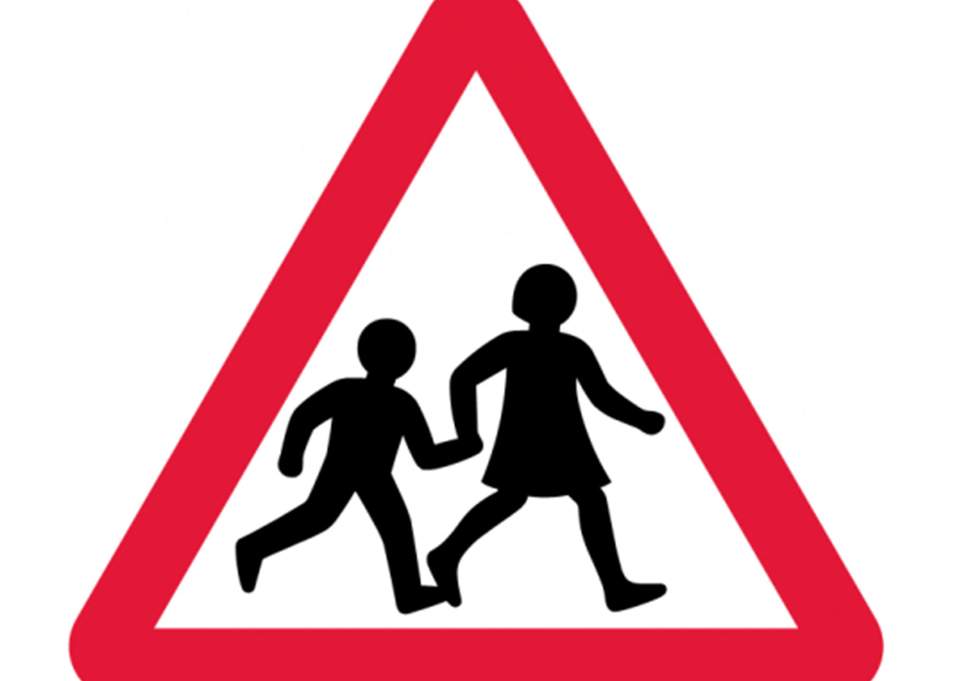
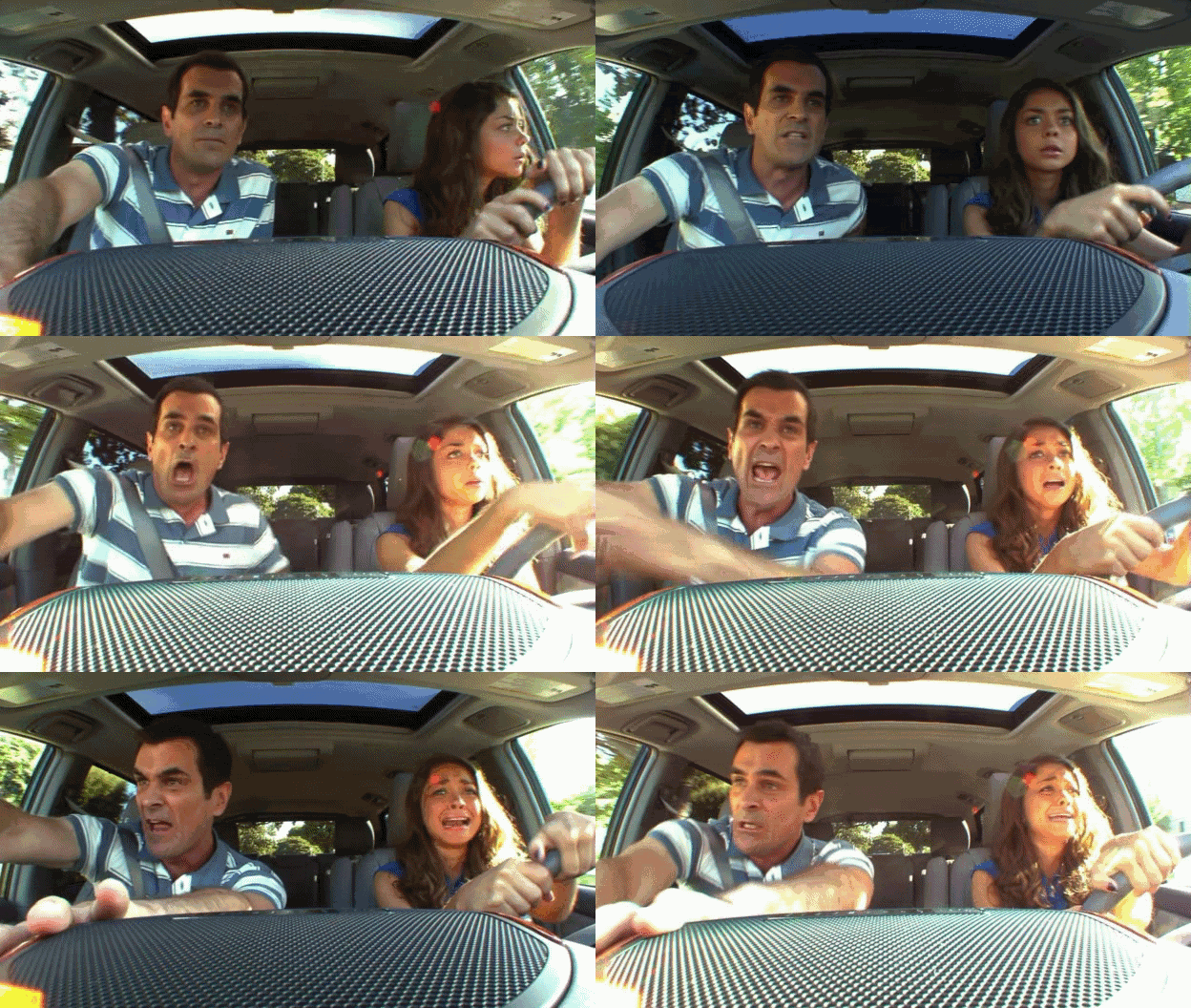
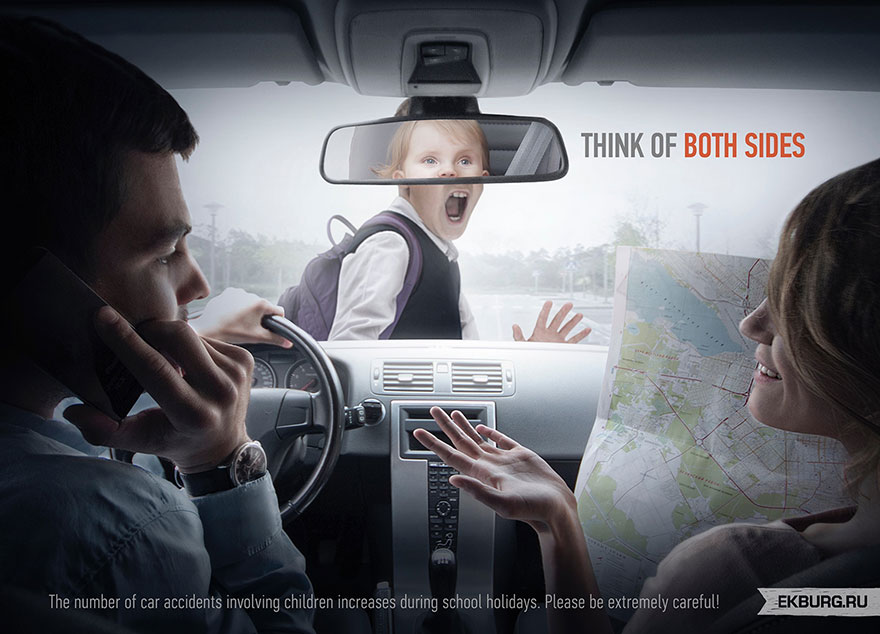
At a glance, the image draws you the rear mirror, a baby, and then to the boy running across the street. The complexity of this still is intense yet confusing. Without analysing it, I probably wouldn’t get it either. Being a driver, it is sometimes hard to be safe? I forget how to drive, basically. So it’s nice to have images like this to remind me. The image is distressing and is straight to the point, you need to be careful driving. The signifier is the children, as children are a sensitive topic in present day and highly protected. Yet the signified is the idea of car crashes itself, and the importance of it’s message. The quote reads “The number of car accidents involving children increases during school holidays. Please be extremely careful” yet the image itself entails the message, and provokes emotion of a large range.

The still’s message is purely to be as careful with the children outside the car as you are with the children inside the car. Although this is the pin point message, the image can also be interpreted in other ways. For example, the illegal use of phones in the car or the distractions of maps. The connotation of advertising safety on roads and protection of children, as well as the denotation of children and oblivious drivers displays a very real image of a common, unfortunate scene. The meaning behind this is relevant, complex and controversial. The characters and positioning is confronting, gaining the immediate attention of the audience and the detailed negligence off a parties in the image creates a baffling response of any receiver. To me, this image is startling, as a new drive, on my green p’s, driving is extremely intimidating and it seems as the months go on, there is more and more danger entailed.

On average, 3 people a day are killed on the roads in Australia, these statistics increasing over school holidays. The chosen image erupts a different range of emotion, anxiety, upset, grief, guilt, all implemented in hopes of gaining one strong reaction from the creator, the need for change.

The advertisement of this still is to decrease children related accidents by making the reader’s response personal, any family based responder is predicted to gain awareness on the roads and change the perspective of the way they drive.

Until next time,

Jules x

Being part of an Audience

Being part of an Audience

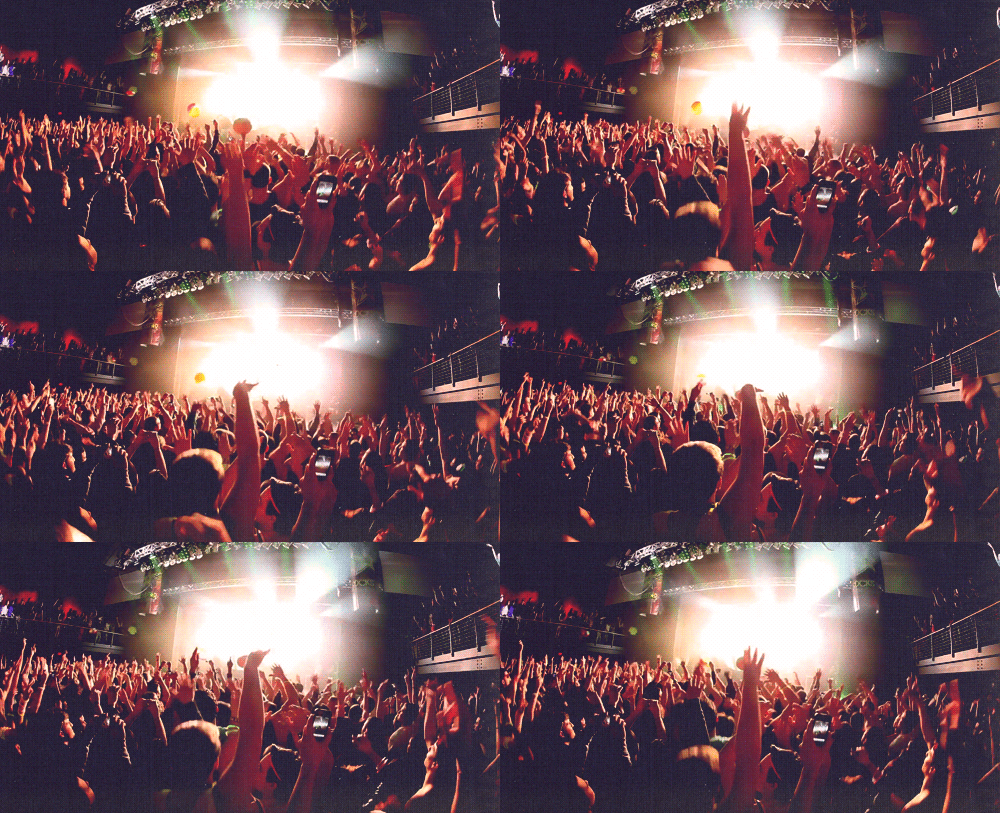
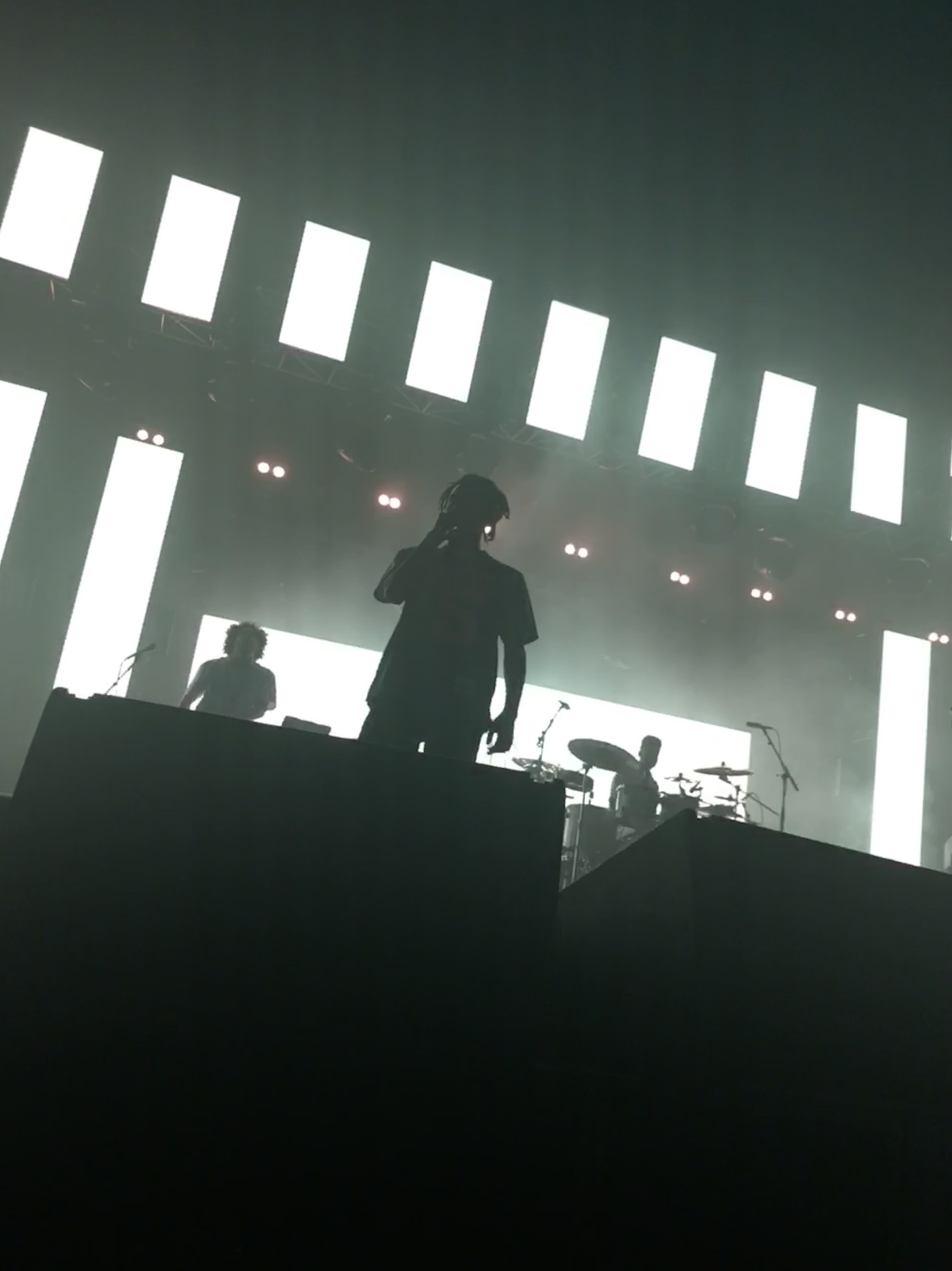
For me, an audience is at it’s prime when gathered in a mosh pit, screaming the lyrics of my favourite song along with thousands of other people all in one place. Last year I attended ‘Groovin’ in Maitland, where I stood at the front of a mosh pit for 6 hours, pressed against a fence, just so I could hear Aminé (an artist who has only one song that I really, actually kind of know) sing “Bad thang, fine as hell, thick as-“. 6 hours just to hear those sweet words. He eventually did and then I had to stand through his other 12 songs that I had never heard in my life but I still managed to mumble along, pretending that I knew every single lyric.

thankyou seccy for the great pic x

Aside from being incoherent, the experience was undeniably one of the best I’ve had in my life so far. The audience in this case brought inclusiveness, as we listened to some of our favourite bands, we were all one.

Audiences however in 2019 are mostly digitalised through voicing our opinions on twitter to binging on Netflix. This has has removed some of the collectiveness of joining together like  in a cinema or watching l lectures online (can’t say I don’t do this).. and it kind of sucks.

From my experience at Groovin, real life, in person audiences are the greatest types of audiences to be part of, and that’s what I really took away from it. I got to meet some extremely wacky but amazing people and was immersed in a new culture of music I’ve never witnessed before.

From my experience at Groovin, real life, in person audiences are the greatest types of audiences to be part of, and that’s what I really took away from it. I got to meet some extremely wacky but amazing people and was immersed in a new culture of music I’ve never witnessed before.

 The only negatives… desperately needing to use the toilet at the front of a contained mosh pit when your favourite DJ is only minutes from entering the stage and having every part of your body touching every single part of someone else’s body (who happened to be a stranger) pushed up against your back. This doesn’t help when you are merely 5 foot tall and I am not exaggerating when I say it was EVERY part of their body pushed up against me. Side note, the feeling of getting pushed against a fence isn’t always fun and lead to my friends and I, holding on the fence occasionally and screaming very loud to let out our frustration. I love being part of a audience… I swear that wasn’t sarcasm.

Until next time,

Jules x

The letter J

The letter J

10 out of 26
“Once you can write an alphabet, you can write a book of 100 million pages. It's just a matter of believing it as possible, and taking the cross millimetre by millimetre.” 
― Israelmore Ayivor

The letter J is the 10th letter of the alphabet and is the first letter of all 3 of my names ‘Julia Jane Johnson’. Letters in the alphabet, although simple, coordinate the basis of writing, producing and relating to any audience through any platform. Beginning my blog with something as plain as the letter J gives me a starting point, from here my blog can go anywhere. Hi, I’m Julia. I have just entered my first year at The University Of Wollongong studying a double degree of Communications and Media as well as Journalism. I moved to Australia nearly 12 years ago in August, when I was 7 years old. Originally from Liverpool, England, my lifestyle has changed drastically and I have experienced polar opposite ideals from two very similar yet different countries. Now living in the good old ‘Shire’ in Sydney, my lifestyle is sheltered at most as a simple RBT near the local school attracts the attention of the whole area and is considered ‘intimidating. Liverpool, on the other hand is renowned for its pickpocketing and danger, yet it’s just every day life. However, I love both of my ‘home’ countries and their differentiations and am proud to say I’m from both. These two environments have adjusted my mindset, giving a profound amount of knowledge on the differentiation of worldview. The Attraction to ‘Communications And Media’ was the revolution of technology and the way it has aided us yet also disadvantaged us in communication. Facebook, Instagram, Twitter and Snapchat have allowed us to talk to anyone and everyone, from anywhere at any time.The millions of opinions spread across social media has shifted the way individuals think ,and I find this extremely interesting. More about me, I love to travel, the image shown is New York, I LOVE travelling. I hope to take my degree overseas, documenting my travels whilst immersing myself in different cultures. Travel Journalism intrigues me and I hope to embark further in this field i the future. My blog is going to have no sole purpose or surrounding topic… it could basically be about anything and everything (but mainly relating to my studies). The power to write as freely as I can is going to be so interesting and I hope you’ll join me in processing how I get through uni in one piece. Make sure to follow my twitter linked below for updates!

Until next time,

Jules x