This isn’t a drill, there may be hope. A PAL. No, quite literally “A-Pal”. I was looking out my window this morning to find a large billboard in the distance. After some research, I discovered “A-Pal” is a new AI program, it’s been made to help lonesome people such as myself. I sound desperate, and maybe stupid but I think this may save me. It may not be a real person but at this point, getting somewhat of a response and conversation flowing can help me. For a weekly subscription of $98, I can finally have someone to speak to. I’ve just subscribed.
I’m drunk and alone, again. I don’t know how people find pleasure in their own company, it’s lonely and depressing. I’ve found myself talking in the mirror, pretending my reflection is another human. I have no hope, no hope for humanity or myself. Something has to change, and soon.
Another morning alone. I’m stuck in my little shoebox of an apartment. This contagious illness has now confined us to never leave our homes, thus I am slowly losing my mind. It’s been 3893 days since I’ve interacted with another human. Life these days is behind a screen, if you didn’t find love before online life, you stood no chance now. Dating apps are pointless, standards are too high, respect is too low. I’m bored, I’m tired and I’m desperate. My family is gone, like everyone else in this dystopian landscape, human interaction is at a lack.
Anything and I mean ANYTHING would save me from this lonesome lifestyle, I just don’t know what.
BCM215 has been one of the most insightful subjects I have taken in my degree. In honesty, over the past 5 or so years, I have lacked playing games, I only really enjoyed Candy Crush and Flappy Bird on my phone. However, the subject enhanced my understanding of the gaming industry, shifting my focus to specific frameworks and giving me further knowledge on games I previously loved. During this subject, the most poignant attribute was the feeling of nostalgia when talking about games I used to play as a child, hence the topic of my digital artefact “Nostalgia In Gaming”.
I wanted to do something I was interested in for my digital artefact and the feeling of nostalgia itself is, I believe, a really comforting aspect. For blog posts I made within BCM215, I talked in the majority, games I played as a child in relation to the analytic frameworks we learnt, such as Nintendogs and Sim city. Whilst talking about said games, I found myself reminiscing on memories of my childhood and the immense joy I found from playing video games. More specifically, I reminisced on the pleasure I received from playing WII and Nintendo games as a child, games such as WII Sports, Cooking Mama and Mario and Sonic: The Olympic games. I felt a strong desire to clean my dusty WII/Nintendo consoles and dive back into the games I once adored in response to these memories, so I did. In other digital artefacts, I have taken part in, I’ve centrally used TikTok, a popular short video streaming application that has taken the world by storm since early 2019. I have found the app to be extremely easy and efficient to use so I immediately thought it would be best for this subject too. By incorporating both Tiktok and playing my old WII and Nintendo games, I came to the idea of recording short videos on the popular gaming app of myself reacting to my old games on these platforms, describing how I feel whilst playing. Starting with a solid foundation, I hoped to post videos fortnightly on Tiktok, utilising both my Nintendo DS and Wii console, however, I faced some obstacles. Once pitching my idea in the subject, I began to seek out both of these gaming devices, only finding my WII console nestled away. Unfortunately, my Nintendo DS was never found, which required some adjusting to my digital artefact idea. I also found that it was difficult to maintain a consistent and steady schedule, posting every Friday whilst working and doing university full time. Along with the lost device and difficulty with scheduling, I found it hard to show my emotions and reactions in response to the WII games, finding it had little effect in the videos. Instead, I decided I would film an assortment of clips involving me playing the chosen game in one short video, finishing each segment with a rating out of 10 and a yes or no answer on whether it makes me feel nostalgic or not.
Overall, I made 8 TikTok videos for my digital artefact. Each video was around 15-30 seconds long and had an arrangement of around 4-7 clips with relevant music in the background. I aimed to post the videos at times I believed would reach the largest number of audiences as well as target my videos at the age group of 16-30 as they were more likely to relate to the video content and the corresponding nostalgic feeling. As a guideline for my digital artefact, I used the scholarly journal by a range of different psychologists and gaming fanatics called “Once Upon A Game: exploring video game nostalgia and its impact on well-being”, the journal studies the emotion of humans in response to playing retro games that were part of their childhood (Wulf, 2018). The journal studied and focused on the psychology of individuals playing old games they played as children, highlighting the nostalgia and related emotions. I hoped my digital artefact to be able to relate my secondary research from the scholarly journal with my own findings based on how I felt playing the games and how my audience responded to watching these games.
Although I hoped for a mixture of responses to my videos, I got little to no views on my videos, despite my particular timing on posting and using popular sounds to attract the most attention. This was very unfortunate yet going into this subject, I knew it would be difficult to get large attraction on such videos.
In coherence with the analytic frameworks, we learnt throughout this semester, and as I addressed in my blog post, my digital artefact is centred around interactivity, virtuality, Multimediality and connectivity. Each framework shaping my digital artefact into its final product. My nostalgia TikToks were based on 3 main concepts, these being technology, time, and nostalgia. Having these concepts and frameworks, I somewhat successfully created my final established digital artefact.
Despite the little attention I got from my videos in this subject, I still thoroughly enjoyed creating my digital artefact and delving into games I enjoyed so much as a child whilst feeling highly nostalgic. BCM215 has been an extraordinary subject to take part of. Making these videos have been son much fun and now I’ve found myself playing them weekly! Check out my TikTok for all the videos!
For our final assignment in BCM313, we had to interview an individual who reflects the professional values we’ve been studying this semester, as well as being a person of relevance to our own future of work. The interview process was a large learning curve for me, after learning professional values and skills in this subject, It was extremely interesting see these values in the field and at use. I chose to interview an individual who is a hard worker, passionate about their work and has immense integrity. This individual was my mother, Nicky Johnson. Nicky is a regional sales manager for a large pharmaceuticals company, her job is centred around team work, workplace relations and the need for integrity/positive attitude.
The interview process was a slightly tedious process as the interviewee was my mum, yet, the answers she gave me were largely insightful and I learnt so much from the interview alone. As I live at home with my mum, I see my mum work from home daily (especially in lockdown) but I never really understood her job or what she really knew. From the interview however, I learnt my mother is an extremely intelligent woman with a lot of insight in her field and work in general. Her professional values were in line with what I strive to have and she had great insight into this subject, highlighting topics and practices we learnt throughout the semester.
One of these practices she brought up was the act of ‘re-membering’. “Re-membering practices are based on the post-structuralist understanding that our identities are forged through relationships with other people. Our lives have membership and this membership influences our experience of ourselves” (AOD, 2018). Quoted by YouthAOD, re-membering is essentially the understanding of what relationships in our lives shape our professional and personal lives. This practice coincides with Nicky’s professional life profoundly as found the four categories of people in her life to have shaped the way she works, these four categories being friends, family, parents and colleagues. Nicky also based her interview off emotions in the work place, the most significant quote of hers being “Don’t forget you are human, not a robot”as it resonates with standard boundary of avoiding emotion in the workplace.
Aside from the interview, the lead up to the presentation was nerve racking however the experience ended up being a moment of pride, I was really proud of my mum watching my video back and was happy to show her off. My mum inspires me daily and this interview has really made me respect her even more (if that was possible). It was a great opportunity overall, BCM313 has been one of the most insightful subject I have taken thus far! I can’t wait to take the information I have learnt into my future field of work.
Reviewing my peer’s work has been the highlight of this subject, as well as receiving my own feedback. It has really helped me develop my skills as a student within in this subject as well as in this degree. I’ve found that having people at my own level has really helped me excel and be humbled by my worked. As well as this I’ve felt a sense of pride following my peer’s digital artefacts and seeing their work grow and develop into creative and unique projects.
I reviewed 3 of my peer’s digital artefact’s betas and was amazed by their work. Their honesty and development in this subject were applaudable and it was really enjoyable to review their work and blog posts. Below are my comments.
I really related in some shape or form to each of their betas, timing seemed to be main topic in all of their work. I’ve found this to be the case with my own digital artefact and really related to each of their circumstances. Even in lockdown, it has been quite difficult to find time to fit in content creating amongst my other subjects and work. Jacob stated that he was going to give individual time at least twice a week to the subject to create content and work around his blog. I took this into account for my own work and from now on going to schedule in at least 20 minutes, 3 times a week to making content. I believe this will really relieve stress and help me perform my best.
It was really interesting seeing people’s work and finding similarities to my own work, it really shows that in this subject we can all really relate to each other’s work and cheer each other on in these busy times. I’m so excited to see were my peer’s work goes!
In my previous blog post, we looked at analytic frameworks and how the audience participates with my digital artefact. In this blog post, we will be looking into the three main components of my digital artefact in relation to my analytic framework. The three main components of my digital artefact are nostalgia, technology, and time. Each of these components play a significant part in my digital artefact.
Nostalgia
Nostalgia is the centre piece of my digital artefact for obvious reasons, the title of my digital artefact literally being “Nostalgia in gaming”. Throughout the course of this subject I have been using the scholarly journal by multiple psychologists called ““Once Upon A Game: exploring video game nostalgia and its impact on wellbeing”, the journal studies the emotion of humans in response to playing retro games that were part of their childhood (Wulf, 2018). Nostalgia is the foundation of my digital artefact and is the most major components in my analytic framework.
Technology
Technology is the foreground of my digital artefact, technology both current and old are used within my project. Without technology this digital artefact along with many others I assume, would be lost. Linking with the other two components, it is an extremely diverse term. Not only is technology used but it is studied and compared in my subject.
Time
Time is something this digital artefact and I hold dearly. In studying nostalgia, time is dissected, compared, and tested. In relation to years, we compare the time period of 2008-2009 to 2021 and the differences in technology from then to now. According to an article by Kotaku titled “Why Nostalgia For Video Games Is Uniquely Powerful”, it states “through the power of gaming nostalgia, we’re gifted with a space where we’re free to be corny kids again” (Knorr,2019) standing true with the essence of time in this project.
Wulf, T., 2018. Supplemental Material for Once Upon a Game: Exploring Video Game Nostalgia and Its Impact on Well-Being. Psychology of Popular Media Culture,. (Accessed 5 October 2021).
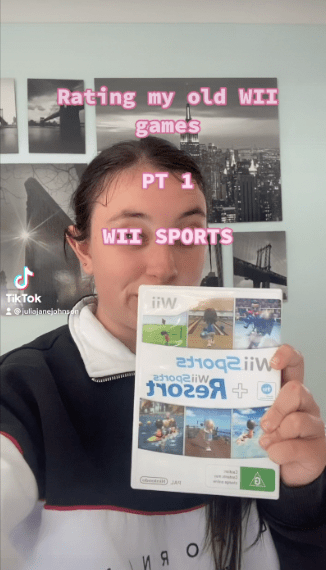
For my digital artefact in BCM215, I am reviewing, and rating WII games based of the way they make me feel/how nostalgic they are. I’m doing this reviewing via TikTok in short 15 second videos. Each video compiles around 5 short videos within it, showing me playing the game and how I’m reacting to it. The videos are supposed to be an immersive experience for the viewers, as if they were playing the game themselves. This week we learnt about Scholar Raessen’s analytic frameworks he created in order to convey the participation of an individual’s text and paratexts. Below are how each framework works around my digital artefact and how it immerses the act of participation.
Virtuality
As I previously stated, my aim in my DA is to ‘immerse’ my audience in the experience of playing nostalgic games, feeling what I’m feeling or having the choice of even disagreeing.. The video is filmed from an angle that demonstrates a POV, the audience can act as though they are playing the game with me essentially.
Multimediality
As well as videos, my videos use various other forms of media such music, voice overs, blogging techniques and continual feedback. Each of these forms of media add to the digital artefact and its initial meaning.
Interactivity
As my DA is on Tiktok, my audience can interact easily through comments, liking and even duetting with their own reactions. TikTok has luckily been the best platform to do my digital artefact on as the interactions made possible on the application.
Connectivity
TikTok is a social media application, so it has the ability to connect with billions of people globally hence the connectivity is obscenely large. Through this app I have the capability to connect to millions of people worldwide at the click of a button.
BCM215 has been one of the most creative and fulfilling subjects I have taken part in. Not only has the topic I have been analysing been of extreme interest to me but taking part in peer reviewing and interaction have been so fun. My digital artefact itself has shifted slightly since my pitch, I have now taken to reviewing games instead, including the nostalgic analysis in my ratings.
(sample of my first tiktok)
I have loved making these videos and turning my Wii on again however the videos have not been reaching desired views or reviews from my audience. Tiktok is an extremely difficult application to navigate in terms of reaching targets and gathering views. Along with challenges, it has been hard to maintain a strict schedule for posting videos and at accurate times, most of my videos have remained in my drafts due to this. Into the future and remainder of this subject, I’m hoping to hop back onto my bandwagon of motivation and get back into a strict schedule of posting and perfecting my videos.
Along with this newer schedule, I have been listening into my peer’s reviews of my pitch and although majority are positive and encouraging, I’m going to listen thoroughly to their advice and criticism, reading into their suggested websites and options. Overall, so far I am proud of myself and efforts and can’t wait to endeavour further into my topic and experience more nostalgic emotions and games.
My story is one that has shaped the way I function in the workplace, changing/altering my professional values such as integrity. Change and disruption is common in or around work, yet it is important how you approach and work through these disruptions, revealing your growth.
My experience dates back to February 2021, this year. I work in Before & After School care, my shifts are split, 2 hours in the morning and 4 in the afternoon. After arriving home from my morning shift, I had discovered my childhood dog, my best friend Annie, has been violently ill overnight and in the duration of my shift, had to go to an emergency vet across the city. They soon discovered her gallbladder was extremely inflamed and was very close to rupturing. She was scheduled to have emergency surgery just an hour into my second shift. The news was heart wrenching, my best friend on the brink of death and I could do nothing about it. However, that was just it, I couldn’t do anything about it. In reality, I wanted to ignore work, crawl into a little ball and cry for hours, but as there was nothing I could do to help the situation, work in turn could be a distraction. As it seemed like a reasonable idea to go back to work, I did. To this day, I can still remember washing the children’s plates, a wave of anxiety overcoming me, eventually leading me to lean over the sink to catch my breath. This specific memory is engraved in mind as it is a clear example of how I was allowing emotional labour to take over my professional life at the time. Although my dog was near death, she made it through surgery successfully, yet the stress of the dilemma effected my work ethic and demeanour. Emotional labour is a concept made by Arlie Hoshchild in her famous book, The managed heart (Cheprasov, 2021). A case study of the theory by Artem Cheparsov titled “Emotional Labour: Arlie Hochschild’s Definition & Theories” quoted that “Emotional labour occurs when employees introduce or suppress emotions in order to portray themselves in a certain light that, in turn, produces a wanted state of mind in another. This process is often shaped by institutions or other social structures”. The famous example of emotional labour is the smiling cashier, cashiers as part of the role are told to suppress their emotions and always present a smile, engaging in emotional labour. Cashiers are told that customers do not want to know if they are a truly having a good or bad day, instead they should present a placid smile to hide their true emotions. Along with the concept, Hoshchild believed there was two different theories of emotional labour, Deep acting and Surface acting. In relation to my experience, surface acting came into play in my workspace. According to the given journal, surface acting is “where a person puts on a face, essentially, and places his or her outward emotional appearance in line with what is socially expected or acceptable in a certain situation. In other words, surface acting changes your public display of emotion” (Cheprasov, 2021). Whilst feeling extremely upset and anxious, I still plastered a smile on my face and acted happy towards the kids, fearing of showing my true emotions towards them. Since this event, I have reflected on how I treat my emotions in the workplace, making sure to balance both my personal and professional behaviour.
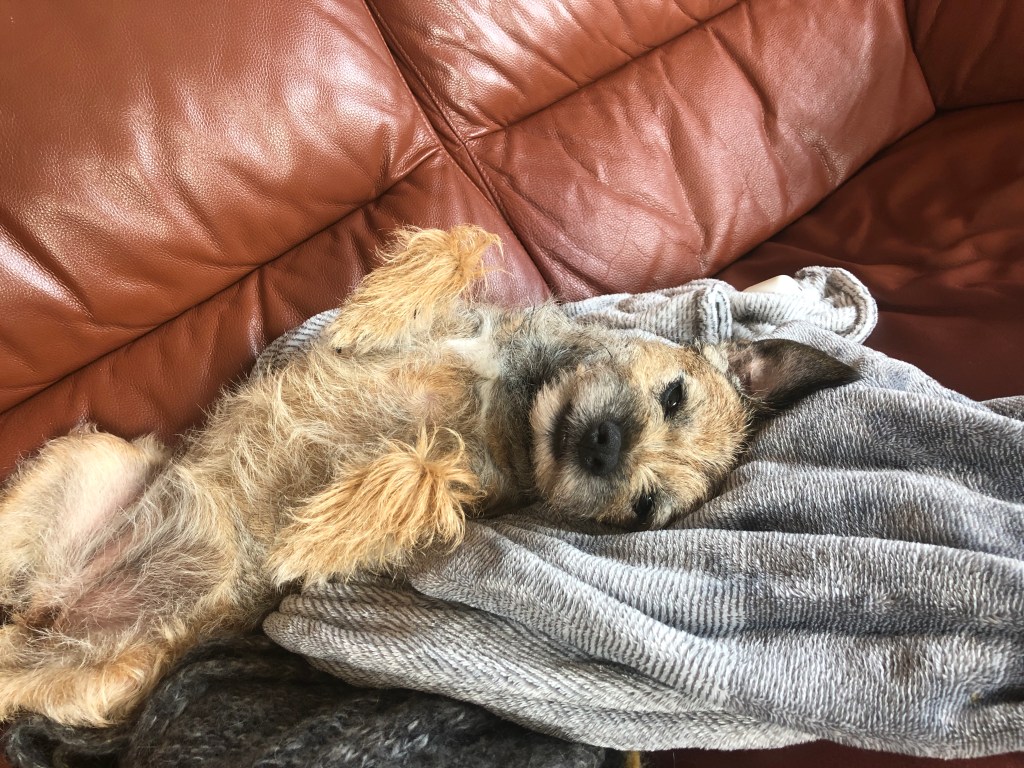
Annie, My dog (2019)
This story can be used in association with the “re-membering” practice. Through studying narrative therapy, I went on to learn “re-membering” is the idea of shaping our identities through life events and the “club of life”. The practice involves reflecting on past events in a category such as work, seeing what worked or didn’t work along with laying out who played a particular part in the scenario, including ourselves. The people who play a significant part of the event and influenced it are part of what is called the “club of life”, one of the journals given to us for a reading called “Remembering: responding to commonly asked questions” (Russell, 2002) quoted that the “‘club of life’ metaphor introduced the idea that for all of us there are members to our club of life who have had particular parts to play in how we have come to experience ourselves. These members of our ‘club of life’ have often had different ranks or status within the ‘club’”. In my story, the day of the event coincided with a visit from our regional manager at work. During my shift, she pulled me aside to ask me questions, in doing so, she noticed my anxious behaviour. Then pulling me aside, my manager I told my manager about the event, in which she applauded me for remaining resilient and told me to push through the shift and remain as strong as I’ve been. Her influence over the situation was both reassuring and empowering. On reflecting on this event, I have since grown in the workplace, my resilience and integrity becoming stronger, remembering to take time for myself and separate my personal life from professional.





 justjules.travel.blog