Self reflection – feeding back

Self reflection – feeding back

Commenting on people’s posts and giving feedback can be quite a daunting experience personally, however, through this subject it has been an educational experience. All three of digital artefacts I commented on were amazing and creative ideas, below are the comments I left on each post.

After reading each post I made the effort to research their ideas, further giving them an article/journal I felt would attribute to their work along with any other ideas I had for their pitches. For both of the pitches involving music, I drew from the “ludomusicology” theory to help them expand their areas of analysis. The FIFA pitch was not exactly in my expertise, yet I tried my best to find an article I believed would aid in Jacob’s analysis. For the music DA pitches, I tried bringing forth journals that looked at the psychological effect of background music and sound effects, I believed this could add extra depth to their DAs. For the FIFA pitch, I provided an article that looked at the game from an outsider’s point of view, the perspective of the game being a different attribute to the DA. For Taylor’s DA I suggested from an actional side, that to expand on posts she could make short clips with reactions to music to link to her analysis.

Although at first, I was nervous to comment my opinion, I believe I gave balanced comments that applauded their great work while giving helpful feedback that could expand their work. In future comments, the only thing I’d really change is maybe by adding what they should change (much to my dismay) but if I believe something doesn’t fit well, I should tell them.Through commenting on these posts, It made me reflect on my own digital artefact and how I can expand and change my own work. Coincidently, the pitches about sound coincide with my idea of nostalgia in gaming. Music is utterly nostalgic and the psychological effects of it are astounding. Both of the journals I offered, I will be taking in to consideration for my own work.

Sim city – A City Of Disaster

Sim city – A City Of Disaster

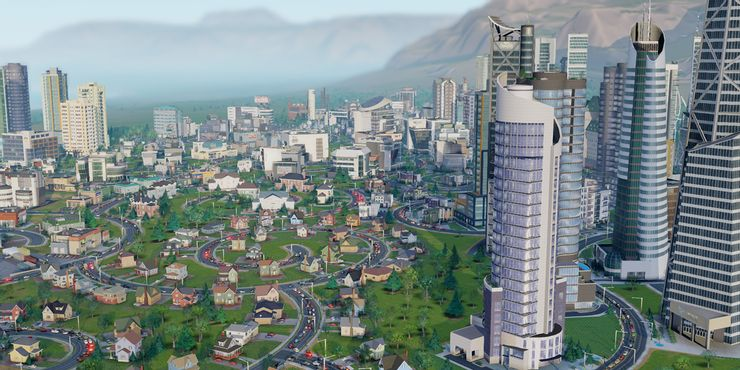
In 2013, the EA franchise came out with the latest version of their iconic concept – Sim city. The game was available among many consoles such as phones and computers and frankly people were highly interested in playing it. The idea of creating your own city from scratch, trading and building up your population was amusing to most, the game even had a multiplayer aspect and 3D features that engaged players, yet, ultimately the game was UTTERLY unsuccessful. After its release, players lost interest quickly. The game requires continual online connection in order to play, people nor had the time or energy to keep playing and upholding their city. Alongside this the game kept crashing due to network outages, saving issues and connections problems. These aggravating issues meant players stopped… well, playing. According to Screen Rant, a popular review site, the game was rated the sixth out of twenty most notoriously bad games (Thompson, 2019). Similarly on a review site called Steam Community, a player reviewed the game, quoting “When I bought SimCity 2013 it wouldn’t even load, It would stick at some % of the install, as was the case for a ton of other people. The game itself was riddled with bugs and to this day roads still don’t snap quite right, and the road guide is way funky” clearly displeased by the game (Steam, 2016). Since 2013, EA has come out with much more advanced versions of the game, gaining much success yet the 2013 version still is viewed as a disappointment and a low point for the company, the game having much potential but never succeeding. People to this day still review the game as one of the worst simulation games to date, the game haunting EA and its future developments.

References

Steam, 2016. What exactly was so bad about SimCity 2013? :: SimCity 4 Deluxe General Discussions. [online] Steamcommunity.com. Available at: <https://steamcommunity.com/app/24780/discussions/0/360672383120784226/&gt; [Accessed 2 August 2021].

Thompson, G., 2019. 20 Notoriously Bad Video Games (That Everyone Still Played). [online] ScreenRant. Available at: <https://screenrant.com/video-games-bad-everyone-played/&gt; [Accessed 2 August 2021].

NINTEN-DOGGED

NINTEN-DOGGED

The Nintendo DS was created back in 2005, the popular gaming device bringing forth hundreds of games in its emergence. One of these games, being arguably the most popular of them all amongst children aged between 5 and 12, was Nintendogs. The simulation game was created by Nintendo itself in 2005 and was released along with the device (Wikia, 2015). The game involved adopting dogs, once they’ve moved into your house it is your responsibility to feed, walk and care for your dog(s). The responsibility of owning many dogs, naming them, and looking after them was a little girl’s dream. Yet, as I myself was a subject to this game, I can say that even at 9 years old, after playing the game for many consecutive weeks, it became subsequently boring. Doing the same routines over and over again, having a limit on the number of household dogs, becoming unhealthy addicted to fake animals…it became a lot, so in response I stopped playing. Now, 12 years on, the game is almost completely forgotten, and after watching a review of the game online, it is completely understandable why it is forgotten. The lack of depth in the gameplay along with the almost scary graphics, children today can now play on devices that feel almost too real and can leave playing it for hours and wouldn’t have time for such an undeveloped game structure. It is only really through this subject that I have remembered the game, and although the gameplay eventually got boring (like most other games at that age) it was a huge part of my childhood, it helped me make friends and as a shy little girl, branch out and use the game as a point of discussion. It was evidently a capstone of my childhood. I can still gage all the times I would hide my DS under my pillow and then continue to play Nintendogs into the early hours of the morning (if I got away with it). Although forgotten, the game was a milestone in simulation technology for its time.

Checking on my Nintendogs for the first time in 14 years - YouTube

References:

Wikia, 2015. Nintendogs. [online] Nintendogs Wiki. Available at: <https://nintendogs.fandom.com/wiki/Nintendogs&gt; [Accessed 5 August 2021].

NOSTALGIA THROUGH GAMING: PRESSING THE ON BUTTON (BCM215 DA PITCH)

NOSTALGIA THROUGH GAMING: PRESSING THE ON BUTTON (BCM215 DA PITCH)

For my BCM215 Digital Artefact, I am going to be analysing the topic called “Nostalgia in gaming”. The digital artefact will be centred around the nostalgia brought forward by games. Personally, the video games I played from the ages of 8 to 15 were through Nintendo devices such as the WII and DS. To this day if I play these games, they immediately release endorphins and happiness throughout my body. Games from your past can bring up both good and bad memories, the emotions and feelings that arise during playing are distinctive and individual.

The DS saved Nintendo while destroying handheld gaming as we knew it -  Polygon

As the basis of my analysis, I will be using a journal by 4 psychologists and gaming fanatics called “Once Upon A Game: exploring video game nostalgia and its impact on wellbeing”, the journal studies the emotion of humans in response to playing retro games that were part of their childhood (Wulf, 2018). The case studies within the journal can be great foundations for my digital artefact and how I move forward with it. I will be using TikTok as my platform of analysis, posting videos reviewing the way I feel in response to playing nostalgic games on my Nintendo WII and DS, listening to the theme songs for example and using the old controllers. My target audience is generation Z and millennials as I feel they can relate most to the nostalgic feeling of playing retro video games. I’m ready to start and am excited to open my cupboard, open a dusty game box, slide it into my console and press the ON button. That alone is nostalgic enough.

my TikTok – https://www.tiktok.com/@juliajanejohnson?lang=en

References:

Wulf, T., 2018. Supplemental Material for Once Upon a Game: Exploring Video Game Nostalgia and Its Impact on Well-Being. Psychology of Popular Media Culture,.

BCM214 Digital Artefact

BCM214 Digital Artefact

Throughout this semester, I took part in a group project to create an object of our choice. Together, we created ‘The Mind Mentor’ an AI object much like Siri or Alexa, yet it can read your thoughts. The digital object involves a robot-like object in your household that can do day to day tasks such as washing the dishes or making dinner before you get home, it also has the ability to control other electronical appliances in your home such as lights or the TV. Using a unique code that you create yourself, you recite the code in your mind followed by your command, the AI then sends a message to a device to confirm your command, when confirmed proceeding to do the task.

Branching off from the group’s project, I wanted to put the Mind Mentor in place from a medical standpoint. I believe The Mind Mentor would be of abundant use as a domestic nurse of sorts. It would be ideal for someone who has just returned from hospital or the elderly who need extreme assistance at home as examples. As the AI object does not require voice activation, someone who unable to talk or move would be perfectly suited for its measures. The Mind Mentor has the capability to do the most tedious of tasks and can ultimately be treated as an in-home nurse by helping with steering a wheelchair, assisting with getting in and out of the shower or bed, making food and refreshments, controlling a stair lift, calling emergency services, paying bills and cleaning both the patient and house, all as examples. All of the highlighted examples can be commanded without even the lifting of a finger. An ideal example of a patient in need of The Mind Mentor is an elderly man who has just came home after major jaw surgery, he has no family yet require tremendous help at home with nearly everything. As he is unable to speak, the AI object would be able to do everything he commands by simply just reading his mind. The object would be of extreme use for the man with his day-to-day tasks as well as being on hand 24 hours a day. The Mind Mentor would also be beneficial from a financial point of view, a one of payment for a permanent object is more suitable than hiring a service that would be rated hourly. In a journal by Nancy Robert, she states “AI is the future of nursing technology” explaining how technology will aid in the future of medicine (Robert, 2019). In coherence with this journal, The Mind Mentor mesh in well with the future of medical technology, aiding both at home and at hospital in helping both nurses and patients. Taking the group developed object ‘The Mind Mentor’ and placing it in a medical environment is aspirational, ethical and highly achievable, it would be of upmost use for millions of patients.

Reference:

Robert, N., 2019. How artificial intelligence is changing nursing. Nursing Management, 50(9), pp.30-39. (Accessed May 23 2021).

DA: https://youtu.be/Ax7ZSheReF4

BCM212 Reflection

BCM212 Reflection

BCM212 has been such a useful and inciteful subject, it was really one of the most in depth in many areas that I’ve taken on. This subject really helped me test out my skills in the real world, it pushed me to my limits at times yet really captivated my learning and helped me excel in other areas of my degree. From the off, when choosing my topic for this subject, I was enthralled, I chose a topic that really related to my own experience and felt confident and comfortable moving forward with it. “The delaying of studies due to COVID” was a topic anyone studying could be a part of and relate to. At the beginning of 2020, I really debated either moving to part time study or deferring university all together due to COVID. I ended up moving to part time study for a semester to adjust into online learning. Using my own experience as a basis, it really helped me excel in formulating questions for my primary research and using key terms to find appropriate secondary research. Yet, although there were many positives, having a topic that was personal made researching and the ethical process slightly difficult. When formulating said questions, I had to remain unbiased and completely neutral. As my experience was very one sided, it was hard to differentiate what I wanted to convey, especially when I wanted to be informed about both sides of the spectrum. It became hard to separate myself from the topic, yet I overcame this and formulated neutral informative questions. Alongside the challenges of bias and creating constructive research, time management and organisation were huge hurdles I have to overcome and adjust to in this subject. Time management and organisation have always been two of my biggest weaknesses, in this subject they really had to become my strengths. I have to admit – I struggled! Keeping track weekly of what I needed to do was challenging and meeting deadlines was also quite stressful and hard. Despite that challenges they presented however, it was an amazing learning curve, I really learnt how to organise my work appropriately and meet necessary deadlines. BCM212 pushed and trained me, I learnt many new skills and found the subject so inciteful. This subject will really help me move onto other subjects and a work environment in the near future with a lot more confidence.

BCM115 WHERE I AM FROM

BCM115 WHERE I AM FROM

For my final project in BCM115, I wanted to immerse in the key elements of my proposed poem and choice of words. The keywords of “Warm, welcoming and safe” enticed the entirety of the video and its concepts. Beginning the video with my favourite childhood book “Matilda” gives the audience a gage on the general ambience of my final project, along with the calming song of “Morning” by Francis & The Lights which is conveniently my favourite time of day. Using in majority still shots with a central focal points and close ups further gave the video a calming yet drawing effect. The atmosphere of the video is also centred around the sound effects included, from the birds chirping in the second frame to my Mum watching television in the background of the seventh frame. The sound effects and videos all reminded me of home which is overall the focus of the project.

BCM115 Assignment 1 – video poem

BCM115 Assignment 1 – video poem

For my first assignment, I decided to take a ‘warm’ approach to the “where I’m from” topic. I described through video, the warmth of my home on a rainy day. The rain dripping down the window symbolises the safety of home. I hoped to create a sense of security, much like how I personally feel being a home with a cup of tea on rainy day with my dogs. Home is where my heart is, much of why I added a video of an old photo album, in capturing my real home, which is wherever my family is.

My draft poem:

I am from a photo album

from weathered photgraphs and home cooked meals

I am from the overcrowded yet comforting sanctuary 

warm, welcoming and safe

The delaying of studies due to COVID – research proposal

The delaying of studies due to COVID – research proposal

After multiple discussions, polls on twitter and research, I have decided to base my research on “the delaying of studies at university due to COVID, how many and why?”. I was attracted to this topic from reading an article by The Wall Street Journal about why you should or shouldn’t defer university until the end of the pandemic. I read this journal for personal advice yet the case study brought to light the many factors on why people are delaying their studies and its consequences/rewards. The article quoted that “Over 20% of Harvard university students decided to defer their studies in 2020” this quote itself intrigued me to continue an investigation into the reasons behind the delaying of studies due to COVID. The topic itself surrounds personal experience, I, myself, delayed my studies to part time, wanting the in-person experience over online experience. COVID is a relevant and timely topic to investigate due to its personal and global impact of recent years. Every individual has been impacted by COVID in some shape or form. Students, in particular, have been enormously impacted by COVID, in both their personal life and academic. In the scholarly article by Pradeep Sahu named “Closure of universities due to COVID19”, He investigates the full closure of universities putting billions of students across the globe in strife. This academic journal will aid me in my future studies on this topic, giving me coherent information to follow off.

Due to my small audience on twitter and the large usage of the BCM212 hashtag, it has been slightly difficult to both engage and gather results. Both of my polls only gathered 12 votes each. That’s a combined 24 votes, predicting that each poll gathered the same audience. I hope to build my audience before investigating further into individuals and surveying the BCM212 audience. In my first poll I allowed my audience to decide what topic they were interested out of two options. The first being “the delaying of studies at university due to COVID, how many and why?” and the second being “What is the adaptability and accessibility of online university like for international students?”. The poll received a 50/50 result out of 12 people, 6 people choosing each topic. Due to this split I had to result to discussion with a fellow student over which topic is more adaptable, the proposed topic ultimately being chosen.

In my brief research so far, I’ve discovered the reasoning behind delaying of studies for university students in general is mostly due to mental health. In the academic journal called “effects of COVID19 on college students’ mental health” a survey was conducted on over 200 students based on their mental health. The journal stated “Out of 195 participants, 138 (71%) indicated that their stress and anxiety had increased due to the COVID-19 pandemic” it then continuing to explain that the pandemic only continued to deteriorate students’ mental health. Linking to my focus topic, mental health is a major subtopic to investigate. The mental health of students could be a colossal factor of the reasoning behind delaying studies at university due to the pandemic. Another factor to take into consideration is the impact on international students and their studies. According to a study conducted by Mike Churney, international students’ enrolment was down by over 14% in Australia last November. He quoted “Although students can study remotely online, international-student enrolments were already down 14% as of November” the main reasoning being the delaying of studies and the changing of universities to local. 

With this gathered knowledge, I am confident with my focus study. My research topic is coherent, timely and highly appropriate. I am excited to embark into my research and discover results that may surprise me or justify my previous instincts. 

References:

Dill, K., 2021. The Challenges—and Rewards—of Deferring College During Covid. [online] WSJ. Available at: <https://www.wsj.com/articles/the-challengesand-rewardsof-deferring-college-during-covid-11607288404&gt; (Accessed 15 March 2021).

Sahu, P., 2020. Closure of Universities Due to Coronavirus Disease 2019 (COVID-19): Impact on Education and Mental Health of Students and Academic Staff. Cureus,. (Accessed 15 March 2021).

Son, C., Hegde, S., Smith, A., Wang, X. and Sasangohar, F., 2020. Effects of COVID-19 on College Students’ Mental Health in the United States: Interview Survey Study. Journal of Medical Internet Research, 22(9), p.e21279. (Accessed 16 March 2021).

Cherney, M., 2021. Covid-19 Leaves Colleges Short on International Students—and Money. [online] WSJ. Available at: <https://www.wsj.com/articles/covid-19-leaves-colleges-short-on-international-studentsand-money-11612434603&gt; (Accessed 16 March 2021)

BCM212 draft pitch

BCM212 draft pitch

In studying BCM212, I had originally narrowed down my pitch to a choice between “the delaying of studies due to covid (how many and why)” and “what is the adaptability and accessibility like for international students due to covid?”. To help me narrow down which topic I should choose, I created a twitter poll to allow my fellow BCM212 cohort to help me make a decision. Unfortunately, it was a 50/50 split, with 12 votes, 6 people chose each topic. 

I therefore had to make an executive decision and chose the topic “The delaying of studies due to covid (how many and why?)”.  This chosen topic is highly relevant in most student’s lives currently. Due to covid. University has moved online yet many students have not been able to advance in their studies due to this. Some students have preferred to move to part time studies or even delaying their studies fully until university resumes back to normal and in person. I predict that my sample space may be fairly low yet I hope many students can relate to the suggested topic. I, myself, moved to part time studies due to covid in semester one last year as I originally believed I would not be able to excel online. I’m hoping many students have had a similar situation to my own and am interested to hear why they chose to delay their own studies.